China has risen to a globally decisive position in electric vehicle (EV) technologies over the last decade. Thanks to the battery supply chain, software-hardware integration, and economies of scale, Chinese brands offer a strong alternative in world markets with their range, price-performance, and equipment levels. In this article, we address world-famous Chinese electric car brands, models sold in Turkiye, and the future of the sector in light of real and verifiable information.
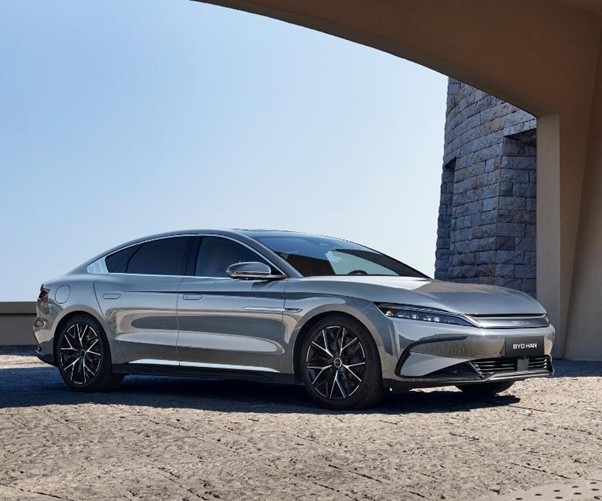
World-Famous Chinese Electric Car Brands
China has established an integrated industrial structure in the electric vehicle ecosystem not only with automobile manufacturers but also with battery manufacturers, software companies, semiconductor suppliers, and technology giants. The brands listed below are listed based on global sales volume, technology investments, their presence in international markets, and information included in official financial/data reports.
Chinese-Based Global Electric Vehicle Manufacturers
| Brand | Founded / Headquarters | Global Position and Verified Information |
|---|---|---|
| BYD | 1995 – Shenzhen | As of 2023, it is one of the world's leading manufacturers of electric and plug-in hybrid vehicles. It produces its own batteries (Blade Battery – LFP). |
| SAIC Motor | 1955 – Shanghai | One of China's largest automotive groups. It conducts extensive EV sales in Europe under the MG brand. |
| Geely | 1986 – Hangzhou | Develops electric vehicle platforms and software architectures. It has a multi-brand corporate structure. |
| Chery | 1997 – Wuhu | Among the export-oriented Chinese manufacturers. It has increased its investments in electric and hybrid vehicles. |
| Great Wall Motor | 1984 – Baoding | Operates in the electric SUV and crossover segments. |
| NIO | 2014 – Shanghai | One of the first manufacturers to commercialize battery swap infrastructure. |
| XPeng | 2014 – Guangzhou | Known for autonomous driving software and advanced ADAS systems. |
| Leapmotor | 2015 – Hangzhou | Develops batteries, motors, and control systems largely in-house. |
| Zeekr | 2021 – Ningbo | The premium electric vehicle brand of the Geely Group. |
Chinese Brand Vehicles and Models Sold in Turkiye
In the Turkish market, Chinese brands attract attention with their combination of competitive price, high equipment, and long range.
BYD
BYD has officially entered the Turkish market and has put its fully electric andplug-in hybridmodels on sale.
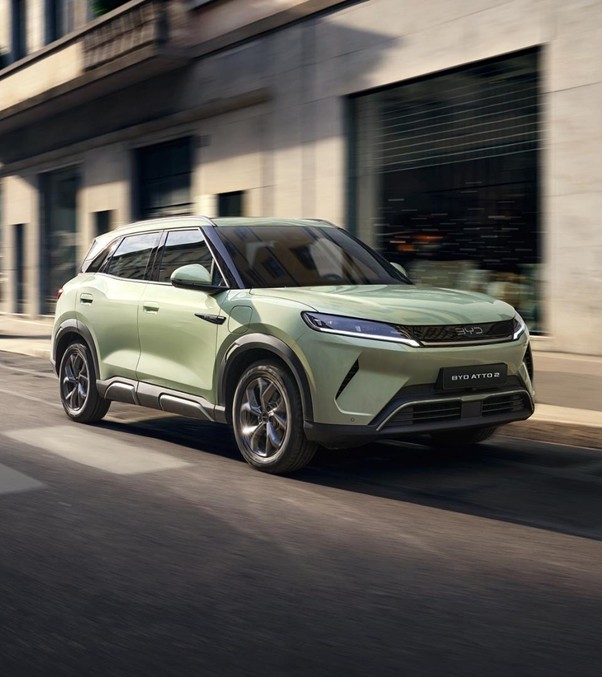
Models sold in Turkiye:
- BYD Atto 2– Fully electric, B-SUV
- BYD Dolphin– Fully electric, B-segment hatchback
- BYD Atto 3– Fully electric, C-SUV
- BYD Seal U EV– Fully electric, D-SUV
- BYD Seal U DM-i– Plug-in hybrit (PHEV), D-SUV
- BYD Seal– Fully electric, D-segment sedan
- BYD Sealion 7– Fully electric, SUV-crossover
- BYD Han– Fully electric, E-segment sedan
- BYD Tang– Fully electric, D/E-SUV
MG (SAIC Motor)
The MG brand belongs to the China-based SAIC Motor group and has been operating in Turkey for a long time.
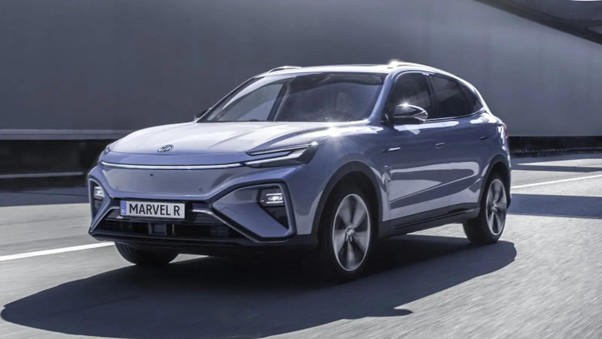
Models sold in Turkiye:
- MG4 Electric– Fully electric, C-segment hatchback
- MG ZS EV– Fully electric, B-SUV
- MG Marvel R Electric– Fully electric, D-SUV
Volvo Cars
Geely Holding Group is a multi-brand automotive group on a global scale. Volvo Cars, which is within the group, officially offers fully electric passenger vehicles for sale in Turkey.
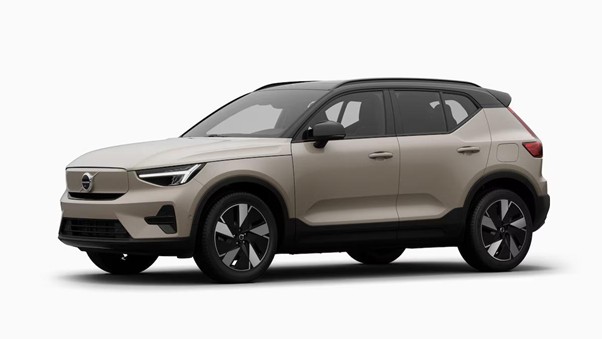
Models sold in Turkiye:
- Volvo EX30– Fully electric, B-SUV
- Volvo EX40– Fully electric, C-SUV
- Volvo EC40– Fully electric, C-SUV (Coupe form)
- Volvo EX90– Fully electric, E-SUV
Chery
Chery mainly sells SUV models with internal combustion and hybrid engines in Turkey.
As of 2025, there is no fully electric passenger car sale on the official Chery Turkey website.
Skywell
Skywell is one of the Chinese brands that only sells electric vehicles in Turkey.
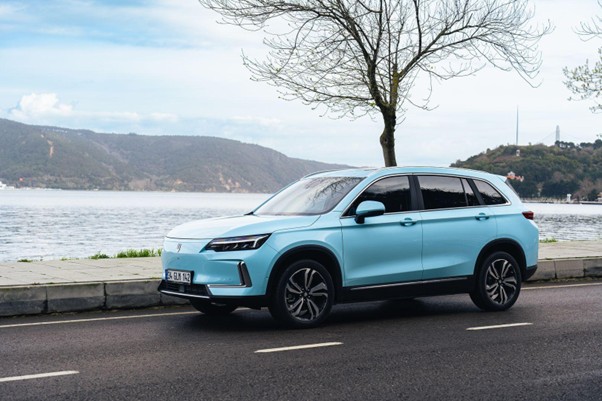
Models sold in Turkiye:
- Skywell ET5– Fully electric, D-SUV
DFSK (Dongfeng Motor)
The DFSK brand under Dongfeng Motor offers a limited number of electric commercial and passenger vehicles in Turkey.
Models sold in Turkiye:
- DFSK Seres 3– Fully electric, B-SUV
The Rise and Future of China's Automotive Sector
China's rapid rise in automotive (especially electric vehicle/NEV - New Energy Vehicle) is being analyzed together with large-scale production, concentration in the battery-mining-refinery chain, energy infrastructure investments, and incentive/standard mechanisms implemented by the state. The framework below is based on findings in publicly available official policy texts and international organization reports.
Production and foreign trade scale
According to the IEA's Global EV Outlook 2025 report, China is in the main hub position in global electric vehicle production and is responsible for more than 70% of global production in 2024; additionally, it has the largest share in global electric vehicle exports in 2024, having realized approximately 40% (approximately 1.25 million) electric vehicle exports.
Battery industry and supply chain integration
A significant portion of China's competitiveness is related to capacity concentration in the battery value chain. In the IEA Global EV Outlook 2024, it is stated that China has approximately 90% share in global cathode active material production capacity and more than 97% share in anode active material production capacity.
In the IEA's battery supply chain analyses, it is emphasized that China has high capacity shares in lithium-ion battery production and critical components such as cathodes/anodes, and that battery-mineral supply chains are concentrated around China.
Concentration in mining, refining, and intermediate products (energy and economic dimension)
Electric vehicle batteries depend on "energy transition minerals" such as lithium, nickel, cobalt, graphite, and rare earth elements. The IEA's Global Critical Minerals Outlook 2025 report contains findings that refining is highly concentrated in many minerals; China has 70-75% shares in lithium and cobalt processing, and 90%+ shares in rare earths and battery-grade graphite refining.
This picture is evaluated together with economic results such as economies of scale in battery materials, supply continuity, and industrial clustering in terms of automotive costs (reports address this concentration directly under the heading of supply security and market risk).
Public policies: incentives, tax regulations, and "credit" mechanism
- China has implemented a broad policy set from direct incentives to regulatory/market-based instruments to support the NEV market.
- Purchase tax exemption/reduction (2024-2027): Official announcements published by the Chinese government state that purchase tax exemption will be applied for NEV purchases in the 2024-2025 period and half reduction in the 2026-2027 period in China; upper limits per vehicle exist.
- "Dual Credit System" (CAFC + NEV credits): The IEA describes China's "Dual Credit" system as a credit mechanism that jointly addresses Corporate Average Fuel Consumption (CAFC) targets and NEV targets, and as a policy framework that directs manufacturers to NEV production/sales.
- NEV credit ratios (2024-2025): A technical policy summary states that NEV credit requirements under dual-credit have been announced as 28% for 2024 and 38% for 2025.
Charging infrastructure: scale, speed (fast charging), and connection with electricity system
Charging infrastructure is reported as a determining factor in the diffusion of electric vehicles.
- According to the IEA Global EV Outlook 2025 report, China added approximately 850,000 publicly accessible charging points in 2024.
- The IEA Global EV Outlook 2024 report states that China constituted 70% of global publicly accessible light vehicle charging infrastructure in 2023.
- The same report provides data that the share of fast charging in public charging stock in China is high and hovers around approximately 45%.
"Technology giants" and automotive software/electronics ecosystem (investment and industrial organization)
In China's automotive competition, besides vehicle manufacturers, battery manufacturers, power electronics, software, and connected vehicle ecosystem actors also play a prominent role. This structure is addressed in IEA reports under the headings of "integrated battery production and supply chain," together with concentration and scale throughout the value chain.
Roles of Technology Companies in the Electric Vehicle Ecosystem
One of the distinctive features of China's electric vehicle ecosystem is that non-automotive technology giants are directly involved in the sector as manufacturers or strategic technology providers.
Xiaomi
Xiaomi officially announced its entry into the electric vehicle sector in 2021.
- As of 2024, it has launched its first mass-production electric car, the SU7, to the market.
- Xiaomi conducts its electric vehicle activities under a separate company structure.
- The company provides vehicle software,battery management, and smart ecosystem integration with systems it develops itself.
- Xiaomi's EV investment is clearly declared in the company's annual activity reports.
Huawei
Huawei does not produce electric vehicles directly under its own brand but assumes the role of a critical technology provider in the sector.
Huawei's contributions include:
- Smart cockpit (HarmonyOS-based infotainment systems)
- Autonomous driving and driving assistance software
- In-vehicle communication and power electronics solutions
Huawei offers these technologies through partnerships with brands such as AITO and Luxeed.
Sources
- BYD Turkiye – Official product pages
- MG Turkiye – Official product catalog
- Skywell Turkiye – Official model presentations
- DFSK Turkiye – Official sales pages
- Chery Turkiye – Official product range
- IEA – Global EV Outlook 2025(Executive summary / Industry trends / Charging / Battery sections)
- IEA – Global EV Outlook 2024(Battery materials & charging infrastructure)
- IEA – Global Critical Minerals Outlook 2025(Refining & concentration)
- Chinese Government announcement – NEV purchase tax incentive (2024–2027)
- IEA Policy database– “Dual Credit System”
- Technical policy summary – Dual-credit NEV kredi oranları (2024–2025)