Electric Vehicles (EV) are increasingly preferred every day with their quiet driving, low energy costs, and environmentally friendly structure. For those considering purchasing an electric vehicle or those already using electric vehicles, understanding the maintenance processes correctly is of great importance in terms of long-term usage costs and vehicle performance.
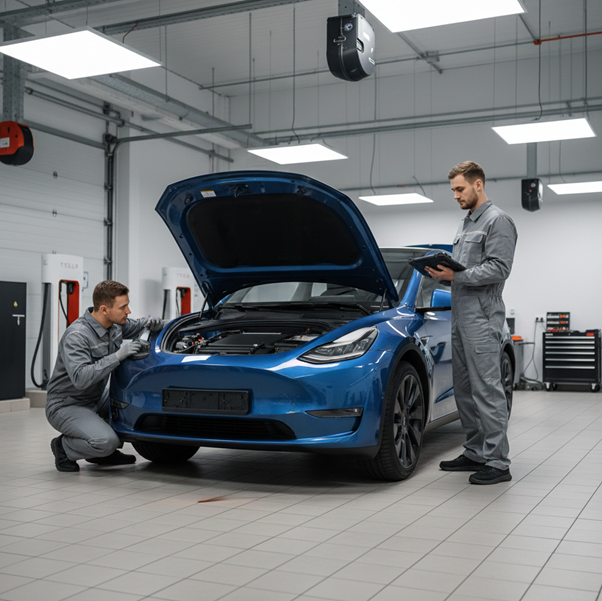
In this guide, we address how electric vehicle maintenance is performed, maintenance costs, critical parts, and periodic maintenance details in a user-focused and understandable language.
How Is Electric Vehicle Maintenance Performed?
Electric vehicle maintenance has a simpler structure compared to internal combustion engine vehicles. Since there is no engine oil, exhaust system, or complex mechanical parts, the maintenance process is shorter and more predictable.
During maintenance, the following checks are generally performed:
- Battery status and health analysis through software
- Control of electric motor and power electronics systems
- Inspection of battery and inverter cooling systems
- Brake system and regenerative braking performance
- Control of tires, suspension, and safety equipment
These procedures are carried out by specialist services with diagnostic devices specific to electric vehicles.
Electric Vehicle Maintenance Costs
The maintenance costs of electric vehicles should be evaluated not only by being "cheaper," but also by how this difference occurs in terms of engineering design and economic structure. Electric vehicles require structurally lower maintenance because they have less complex systems compared to internal combustion vehicles.
Why Is Less Maintenance Required?
The basis of the maintenance advantage of electric vehicles lies in the reduction of mechanical complexity.
The following systems found in an internal combustion vehicle do not exist in electric vehicles or are in much simpler form:
- Engine oil, oil filter, and fuel filter
- Timing belt or chain
- Turbo, exhaust, catalytic converter, and EGR system
- Transmission oil and multi-stage gear mechanisms
In electric vehicles, power transmission is provided through electric motor, inverter, single-ratio reduction gear. This structure means: Less friction, less thermal stress, fewer wearing parts.
Additionally, thanks to regenerative braking, since kinetic energy is recovered, brake pads and discs wear much more slowly. This directly extends maintenance intervals.
Battery and Power Electronics: Where Is the Real Cost?
The most expensive component in electric vehicles is the battery; however, there is an important misconception here. The battery:
- Is not a part that requires periodic maintenance
- Is continuously monitored through software and sensors
- Is under long-term capacity warranty in most modern vehicles
From an engineering perspective, battery maintenance cost is managed with a predictive rather than reactive approach. That is, instead of physical part replacement: Cell balance is monitored, thermal management is controlled, software optimizations are made. This prevents maintenance costs from being sudden and unpredictable.
Total Cost of Ownership (TCO)
When evaluating electric vehicle maintenance costs, it is necessary to look not only at individual service invoices but at the Total Cost of Ownership (TCO) approach.
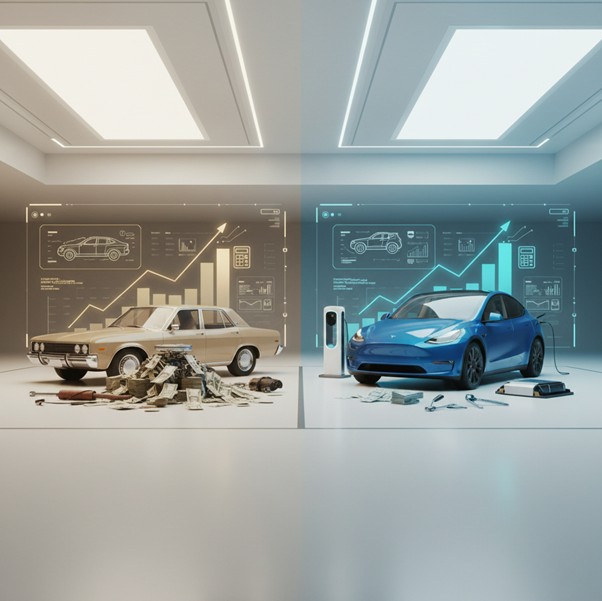
In terms of maintenance costs, electric vehicles:
- Require fewer service visits
- Service times are shorter
- Part replacement need is lower
This situation directly produces the following economic results:
- Lower annual maintenance expense
- Less labor and time loss
- More stable cost structure in the long term
Especially in 3-5 year usage periods, maintenance-related expenses of electric vehicles are 30% to 50% lower compared to gasoline or diesel vehicles.
Predictability and Inflation Effect
From an economic perspective, another important element is cost predictability. In electric vehicle maintenance:
- The number of consumables is low
- Currency-based part dependency is lower
- Unexpected mechanical failures are rarer
This situation provides a significant advantage for users, especially in high inflation environments. Maintenance costs increase more slowly and budgeting is easier.
Digital Maintenance Approach
Maintenance processes in electric vehicles have gradually become digitalized and data-driven. Thanks to sensors, remote diagnosis systems, and software updates:
- Failures are detected before they occur
- Service need is optimized
- Unnecessary part replacements are prevented
This approach transforms the "reactive cost" model in classical vehicle maintenance into a planned and controlled cost structure in electric vehicles.
What Are the Important Parts in Electric Vehicle Maintenance?
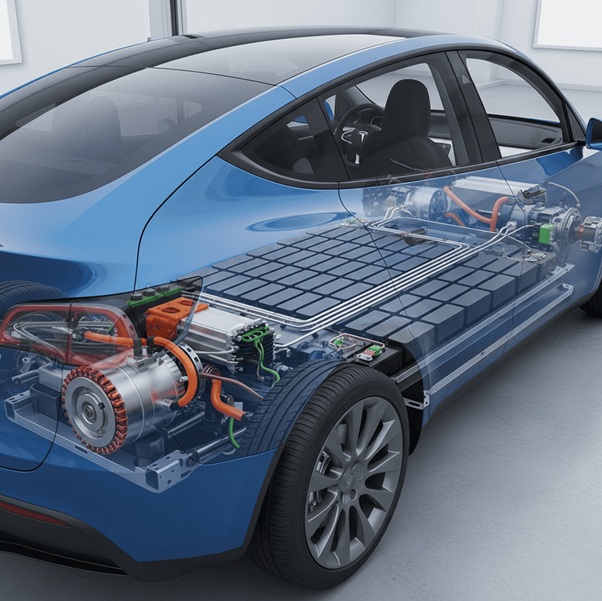
The main components that stand out in electric vehicle maintenance are:
Battery (Battery Pack)
It is the most critical part of the electric vehicle. Modern batteries are designed to be long-lasting and their performance is monitored with regular software checks.
Electric Motor and Inverter
These systems that provide power transmission generally do not require maintenance; however, connections and software are regularly checked.
Cooling System
It is vitally important for the battery and power electronics to operate at ideal temperature. Fluid levels and leak-tightness are regularly checked.
Brake System
It wears less thanks to regenerative braking; however, periodic control is essential for safety.
What Is Electric Vehicle Periodic Maintenance and What Is Checked?
Periodic maintenance in electric vehicles is generally performed once a year or at 15,000-20,000 km intervals. The purpose of this maintenance is to ensure the smooth operation of both mechanical and digital systems of the vehicle.
In periodic maintenance:
- Software updates and system calibrations
- Battery capacity and cell balance checks
- Tire, suspension, and steering system inspections
- Tests of driving assistance and safety systems
Regular periodic maintenance extends battery life and contributes to preserving the vehicle's second-hand value.
Frequently Asked Questions About Electric Vehicle Maintenance
Do Electric Vehicles Need Maintenance?
Yes, electric vehicles also need maintenance. However, the scope of maintenance is more limited and generally lower in cost. Especially battery and software checks are critically important for long-lasting use.
Where Is Electric Vehicle Maintenance Performed?
Electric vehicle maintenance should be performed at authorized or specialist services with equipment suitable for electric vehicle technology and trained technical personnel. This is important both for safety and for preserving warranty conditions.
How Often Is Electric Vehicle Maintenance Performed?
Generally, it is recommended to perform maintenance once a year or at kilometer intervals determined by the manufacturer. In intensive urban use, tire and brake checks can be done more frequently.
Electric vehicles offer significant advantages to their users in the long term thanks to their low maintenance costs, less part need, and high efficiency. For those considering buying an electric vehicle, knowing the maintenance processes is one of the fundamental steps of making the right decision and experiencing a trouble-free usage experience.
References:
- https://www.energy.gov/
- https://www.bosch-mobility.com/en/
- https://www.iea.org/reports/global-ev-outlook-2024
- Artificial intelligence was used for images.