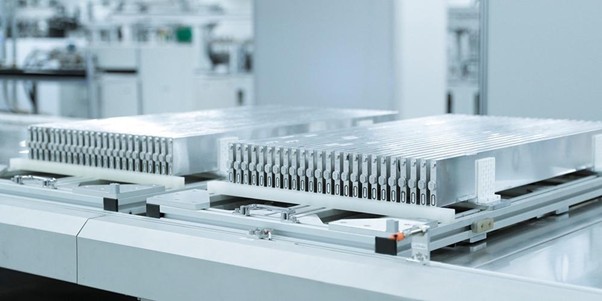
The fundamental driving force behind the electric vehicle revolution is lithium-ion technology, which surpasses its competitors with energy density and cycle life. In this article, we examine the energy storage solutions of modern mobility from a technical perspective.
What is a Lithium-Ion Battery?
A lithium-ion (Li-ion) battery is a type of rechargeable electrochemical cell in which lithium ions move from the negative electrode (anode) to the positive electrode (cathode) during discharge, and in the opposite direction during charging.
According to International Energy Agency (IEA) reports, lithium-ion batteries have become standard in the electrification of transportation thanks to their high energy efficiency. Unlike traditional lead-acid batteries, these batteries have no "memory effect" and are much lighter.
Lithium-Ion Battery Characteristics
The critical parameters that define a Li-ion cell from an engineering perspective are:
- Nominal Voltage: Generally between 3.6V - 3.7V per cell.
- Energy Density: Has reached levels of 250-300 Wh/kg with current technology.
- Cycle Life: A quality automotive battery can offer 1500 - 3000 full charge cycles until it drops to 80% of its capacity.
- Thermal Stability: Operating temperature range is critical, with ideal performance obtained between 15°C and 35°C.
How Do Lithium-Ion Batteries Work?
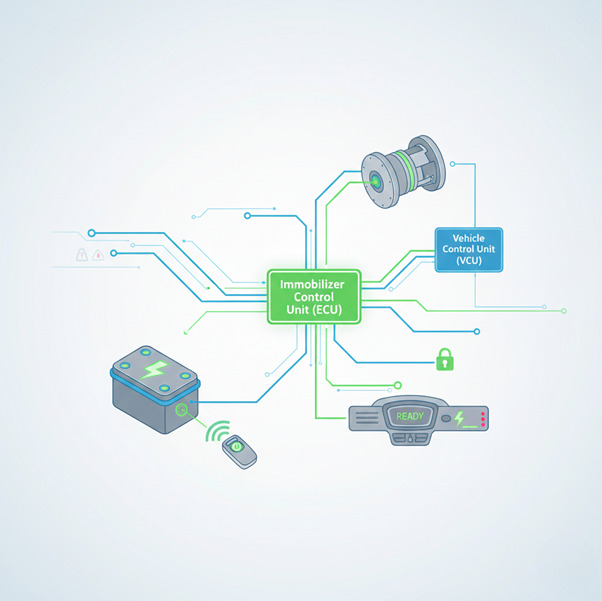
The working principle of lithium-ion batteries is based on the "intercalation" (insertion between layers) process.
- During Charging: When an external power source is applied, lithium ions in the cathode separate, pass through the electrolyte, and settle between the graphite layers in the anode.
- During Discharge: When the vehicle is operating, the ions in the anode return to the cathode. The electron flow created during this movement generates the current that powers the electric motor.
- Separator: There is a microporous polymer layer between the anode and cathode that allows ion passage but prevents short circuits.
What Types of Batteries Are Used in Electric Vehicles?
Different Li-ion derivatives are used in the EV market according to their chemical compositions:
- NMC (Nickel Manganese Cobalt): Preferred by manufacturers like Tesla and Volkswagen due to high energy density.
- LFP (Lithium Iron Phosphate): Safer, longer-lasting, and cheaper (for example; standard range Tesla Model 3 and BYD models).
- NCA (Nickel Cobalt Aluminum): Offers very high energy density but thermal management is more difficult.
Advantages of Lithium-Ion Batteries in Electric Vehicles
- Fast charging capacity: With DC fast charging (Level 3), they can reach 80% fullness in 30 minutes.
- Self-discharge rate: They have a very low loss of approximately 1.5 - 2% per month.
- Design flexibility: They can be produced in prismatic, cylindrical, or pouch form and integrated into the vehicle's chassis (skateboard chassis).
Disadvantages of Lithium-Ion Batteries Used in Electric Vehicles
- Thermal Runaway: In case of cell overheating, fire risk may occur; therefore, sophisticated Battery Management Systems (BMS) are required.
- Cost: The battery pack still constitutes 30 - 40% of the total vehicle cost.
- Raw Material Dependency: Environmental and ethical challenges of lithium, cobalt, and nickel mining exist.
LFP and NMC Battery Comparison
The choice between NMC (Nickel Manganese Cobalt) and LFP (Lithium Iron Phosphate) is a matter of trade-off between the vehicle's range, cost, and security profile. Here is a comparison of these two dominant technologies with technical data:
| Feature | NMC (LiNiMnCoO2) | LFP (LiFePO4) |
|---|---|---|
| Energy Density | High (150-250 Wh/kg) | Medium (90-160 Wh/kg) |
| Cycle Life | 1,000 - 2,000 Cycles | 3,000 - 6,000+ Cycles |
| Thermal Runaway Temperature | ~210°C | ~270°C |
| Nominal Voltage | 3.6V - 3.7V | 3.2V - 3.3V |
| Cost | Higher (Contains Cobalt) | Lower (Iron/Phosphate abundant) |
| Application Area | Long-Range Performance Vehicles | Urban Vehicles, Commercial Fleets |
Thermal Stability and Safety
LFP chemistry is thermally more stable due to much stronger oxygen bonds. While in NMC batteries oxygen can be released during a failure, feeding combustion, in LFP batteries the "exothermic reaction" (heat-releasing reaction) starts much later and slower. This puts LFP one step ahead in safety-priority projects.
Charging Habits and Depth of Discharge (DoD)
Engineering guidelines generally recommend keeping NMC batteries in the 20%-80% fullness range to preserve their lifespan. However, LFP batteries are much more tolerant to being charged up to 100% fullness thanks to their very flat voltage curves.
- NMC Note: Continuously charging to 100% can lead to degradation in the cathode structure.
- LFP Note: Charging to 100% at least once a week is recommended for BMS (Battery Management System) calibration.
Cold Weather Performance
NMC batteries show significantly higher performance in low temperatures compared to LFP. LFP batteries experience a more aggressive loss compared to NMC in both charging speed and range due to increased internal resistance at temperatures below 0°C.
Energy Density and Weight Efficiency
When the same battery capacity (for example 60 kWh) is targeted, LFP packs are approximately 20%-30% heavier than NMC packs. This situation creates additional load on suspension and brake systems by increasing the total weight of the vehicle. For this reason, NMC/NCA is still preferred in upper segment, long-range vehicles (Tesla Model S, Lucid Air, etc.).
- IEA – Global EV Outlook 2023 (Global Electric Vehicles Outlook). Access: https://www.iea.org/reports/global-ev-outlook-2023
- SAE International – J2929: Surface Vehicle Recommended Practice (Electric Vehicle Safety Standard). Access: https://www.sae.org/standards/content/j2929_201302/
- Nature Energy – Academic Energy and Battery Research Journal.
- Argonne National Laboratory – BATPAC Model Software (Battery Pack Simulation Tool). Access: https://www.anl.gov/
- BloombergNEF – Lithium-Ion Battery Pack Prices Rise for First Time Since 2010. Access: https://about.bnef.com/blog/lithium-ion-battery-pack-prices-rise-for-first-time-since-2010/
- BYD Global – News About BYD Lithium Battery Co., Ltd. Access: https://www.bydglobal.com/en/news/2024-12-24/BYD-Lithium-Battery-Co.%2C-Ltd.-Overview