EPDK is one of the critical institutions responsible for the regulation, supervision, and smooth functioning of energy markets in Turkey. Particularly with the proliferation of electric vehicle charging stations, EPDK’s role has extended beyond the electricity, natural gas, petroleum, and LPG markets, becoming increasingly prominent in the development of the charging service market as well. So, what is EPDK, what does the acronym stand for, which sectors does it regulate, and why is it so important for electric vehicle charging stations?
What is EPDK?
EPDK is the acronym for the "Energy Market Regulatory Authority." It is a public legal entity that operates to regulate and oversee energy markets in Turkey.
The primary mission of EPDK is to contribute to the transparent, competitive, orderly, and sustainable functioning of energy markets. The Authority carries out duties across various areas—such as legislation, licensing, inspection, market monitoring, and consumer rights—within the sectors of electricity, natural gas, petroleum, LPG, and energy transition.
Regarding electric vehicle charging stations, EPDK is the body that establishes the rules for the charging service market and regulates the licensing processes for companies wishing to operate in this field. Consequently, EPDK plays a crucial role in ensuring the safe and regulated growth of the electric vehicle ecosystem.
Which Areas Does the EPDK Regulate?
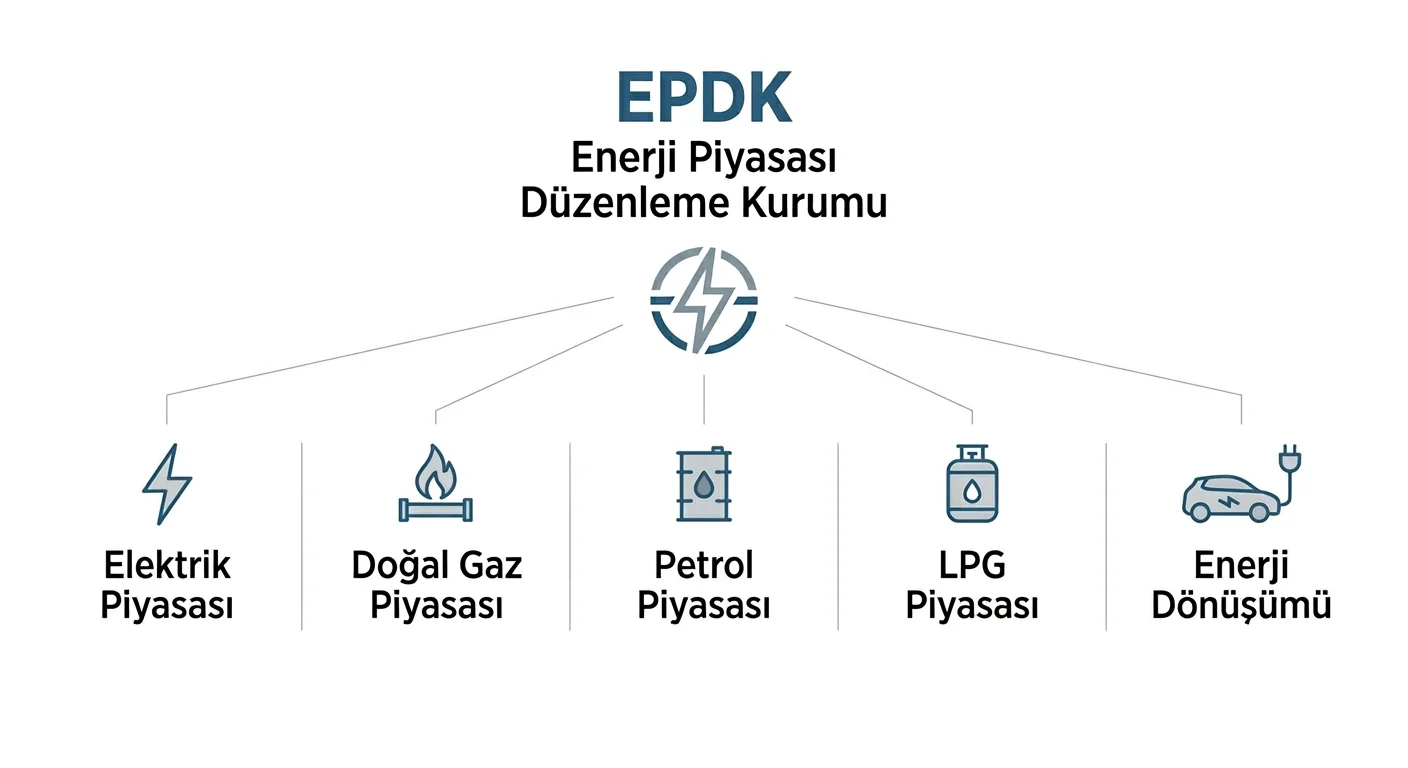
EPDK assumes a regulatory and supervisory role across various sectors of Turkey’s energy markets. The institution's areas of activity can generally be categorized as follows:
- The electricity market is one of EPDK’s primary areas of regulation. Electricity generation, transmission, distribution, supply, licensing processes, and market operations fall within this scope.
- The natural gas market also falls within EPDK’s mandate. Natural gas importation, transmission, storage, distribution, and related licensing processes are subject to the institution's regulations.
- In the petroleum market, licensing procedures for activities such as refining, distribution, dealership, transportation, and storage are among the areas regulated by EPDK.
- In the LPG market, licensing processes for distribution, storage, transportation, and autogas dealership fall under EPDK’s regulatory purview.
In recent years, energy transition has also become a significant area of focus for EPDK. The electric vehicle charging service market, charging network operator licenses, charging stations, and charging service infrastructure are addressed under this category.
Therefore, the simplest answer to the question "What is EPDK?" is this: EPDK is the public regulatory body that ensures Turkey’s energy markets operate in a regulated, reliable, and auditable manner.
What Are the Duties of the Energy Market Regulatory Authority?
The duties of the Energy Market Regulatory Authority (EPDK) are centered on ensuring the orderly functioning of energy markets. While these duties vary depending on the specific energy market, they can generally be categorized under licensing, supervision, legislation drafting, market monitoring, consumer protection, and supporting the development of the sector.
The EPDK manages the licensing processes for companies wishing to operate in energy markets. Various types of licenses—such as electricity generation, supply, and distribution licenses, as well as petroleum market licenses, LPG licenses, and charging network operator licenses—fall within this scope.
The Authority also monitors whether market activities are conducted in compliance with regulations. Ensuring that licensed companies fulfill their obligations, protecting consumer rights, and maintaining the orderly operation of the market all fall within the EPDK's mandate.
The EPDK's duties have become even more critical regarding electric vehicle charging services. This is because the installation of charging stations, the operation of charging networks, the provision of charging services to users, and the execution of these services within a specific set of rules require a direct regulatory framework.
What Is an EPDK License?
An EPDK license is an official authorization document required to conduct specific activities within energy markets. In other words, companies wishing to operate in the energy sector may need to obtain a license from EPDK (Energy Market Regulatory Authority) based on the relevant market and type of activity.
A license signifies that a company is authorized to operate in the relevant energy market in compliance with regulations. However, not all licenses cover the same scope; the license required by a company intending to generate electricity differs from that required by a company wishing to operate an electric vehicle charging network.
Within the electric vehicle charging sector specifically, one of the most critical license types is the "charging network operator license." This license is essential for legal entities that wish to establish a charging network, operate charging stations connected to that network, and provide charging services to users.
Therefore, companies planning to invest in electric vehicle charging stations must consider not only the technical infrastructure but also EPDK regulations and licensing obligations.
What Are the EPDK License Types?
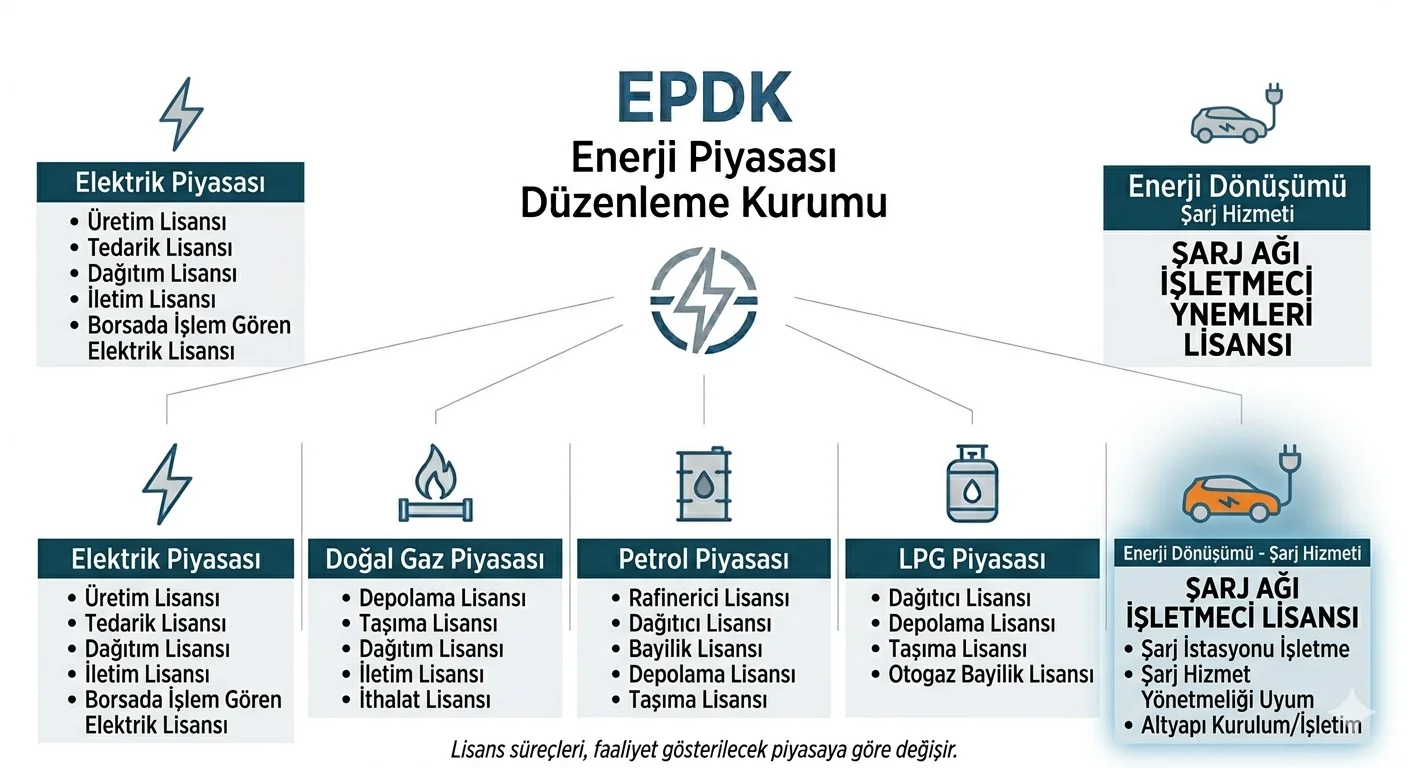
EPDK license types vary according to the specific energy market in which operations are conducted. Distinct license categories exist for the electricity, natural gas, petroleum, LPG, and charging service markets.
In the electricity market, licensing processes cover activities such as generation, supply, distribution, and transmission. For instance, an electricity generation license is essential for legal entities intending to carry out electricity generation activities.
The petroleum market includes license types such as refiner, distributor, dealership, transportation, and storage licenses.
The LPG market features various license categories, including distributor, storage, and transportation licenses, as well as autogas dealership licenses.
In the electric vehicle charging service market, the charging network operator license is a key designation. The Regulation on Charging Services establishes the procedures and principles governing charging units and stations that supply electricity to electric vehicles, as well as the operation of charging networks and the provision of charging services.
In this context, EPDK license types have become critical not only for companies engaged in energy generation or distribution but also for those wishing to establish and operate electric vehicle charging infrastructure.
How to Perform an EPDK License Inquiry?
An EPDK (Energy Market Regulatory Authority) license inquiry is a key process used to check the licensing status of companies operating in the energy market. Through this inquiry, one can examine which market a company operates in and the type of license it holds.
EPDK publishes licensing procedures and license lists categorized by different energy markets on its official website. License information for the electricity, petroleum, LPG, and other markets can be accessed via the respective market headings.
In general, the following steps can be taken for an EPDK license inquiry:
First, visit EPDK’s official website. Next, select the relevant market heading. Depending on whether the inquiry concerns electricity, natural gas, petroleum, LPG, or energy transition, review the licensing procedures or license lists in that specific section. Subsequently, a search can be conducted using criteria such as company name, license type, province, license status, or other relevant filters.
Specifically regarding the electric vehicle charging sector, it is possible to track companies holding charging network operator licenses and their charging stations via platforms provided by EPDK. This enables users and industry stakeholders to access more transparent information about licensed operators.
The Impact of EPDK Decisions on the Energy Secto
Decisions made by EPDK (Energy Market Regulatory Authority) have a direct impact on the functioning of the energy sector. This is because the licensing obligations, market rules, consumer rights, tariffs, and technical and administrative processes of companies operating in the energy market are shaped by EPDK regulations.
This impact is particularly pronounced regarding electric vehicle charging stations. As the number of electric vehicles in Turkey rises, the charging infrastructure must expand in a manner that is reliable, accessible, and subject to oversight. EPDK’s regulations concerning the charging service market facilitate this growth within a structured regulatory framework.
Aspects such as charging network operator licensing, the operation of charging stations, the provision of charging services, user information, and the monitoring of market data directly influence the user experience for electric vehicles.
Consequently, EPDK decisions are significant not only for energy companies but also for electric vehicle users, investors, technology providers,
charging network operators, and the automotive sector.
Frequently Asked Questions About EPDK
What Is the EPDK Charging Station Regulation?
The primary regulation concerning electric vehicle charging stations is the Charging Service Regulation published by EPDK. This regulation governs the procedures and principles regarding the installation of charging units and stations that supply electrical energy to electric vehicles, the operation of charging networks, and the provision of charging services.
This regulation establishes the rules that companies operating in the charging service market must follow. It aims to create a more reliable, traceable, and orderly charging infrastructure for electric vehicle users.
Is EPDK a Government Agency?
Yes. EPDK is the Energy Market Regulatory Authority of the Republic of Turkey. It is a regulatory body with a public legal personality. It carries out regulatory and supervisory functions within the energy markets.
EPDK’s decisions are significant for companies operating in the energy market and for relevant sector stakeholders. Therefore, the legislation, announcements, license lists, and decisions published by the authority should be regarded as official sources.
Is There a Fee for EPDK License Inquiries?
License lists and license information published on EPDK’s official website are intended for public information purposes. The primary objective of license inquiries is to check the status of licensed companies operating in the market.
However, official procedures such as license applications, license amendments, term extensions, or similar actions may involve application, licensing, or processing fees stipulated in the relevant legislation. Therefore, inquiry processes and application/processing fees should be considered separately.
Where Are EPDK Applications Submitted?
EPDK applications are submitted via the EPDK Application System. The application system enables the electronic submission of applications to the EPDK (Energy Market Regulatory Authority).
The system can be accessed via login options such as e-Government (e-Devlet), mobile signature, or electronic signature. Applications for electric vehicle charging network operator licenses are also processed through the electronic application system, in accordance with the procedures and principles announced by the EPDK.
References
Energy Market Regulatory Authority (EPDK). (2026). Official website. Access address:https://www.epdk.gov.tr/