In Turkey, speed limits are determined to regulate driver safety and traffic flow, and higher limits are applied on motorways compared to other roads. These limits are of critical importance not only in terms of safety for electric vehicle users in particular, but also in terms of range management and battery efficiency due to high speed increasing energy consumption.
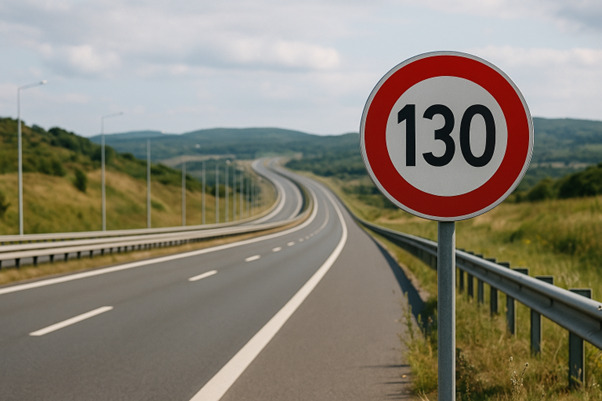
What are Highway and Motorway Speed Limits?
In Turkey, speed limits on highways are determined to ensure driver safety, regulate road capacity, and keep traffic density under control. Although highway and motorway speed limits are higher compared to other road types, they are applied taking into account safety, the vehicle\'s technical capacity, and traffic rules.
Especially for electric vehicle (EV) users, speed limits are critically important not only regarding safety but also in terms of range management, battery efficiency, and energy consumption. Since high speed significantly increases kWh consumption in electric vehicles, adhering to speed limits in long-distance planning ensures both safety and efficiency.
Speed Limits Table by Vehicle Type
In Turkey, speed limits vary according to categories: within residential areas, outside residential areas, divided roads, and highways/motorways. The table below summarizes the speed limits valid for 2025.
Current Speed Limits by Vehicle Type (2025)
| Vehicle Type | Urban (City) | Intercity Single Road | Divided Road | Motorway / Highway |
|---|---|---|---|---|
| Car | 50 km/h | 90 km/h | 110 km/h | 130 km/h |
| Electric Car | 50 km/h | 90 km/h | 110 km/h | 130 km/h |
| Motorcycle | 50 km/h | 80 km/h | 100 km/h | 120 km/h |
| Van / Pickup | 50 km/h | 80 km/h | 90 km/h | 110 km/h |
| Bus | 50 km/h | 80 km/h | 90 km/h | 100 km/h |
| Truck / Tow Truck | 50 km/h | 80 km/h | 80 km/h | 90 km/h |
Note: Highway speed limits can be increased up to 140 km/h in some regions through regulations made by the Ministry of Transport and Infrastructure. However, the general limit is 130 km/h.
Points to Consider on Highways and Motorways with Electric Vehicles
Traveling at high speeds with electric vehicles causes much faster energy consumption compared to internal combustion engine vehicles. Therefore, EV users need to pay particular attention to the following points:
- High speed = high consumption: The consumption curve rises noticeably after 110 km/h.
- Charging planning: High speed on long journeys can cause more frequent stops at charging points.
- Battery temperature: High speed and sudden accelerations can increase battery temperature; the thermal management system consumes more energy.
- Regenerative brake use: Although not as effective as in the city, it provides range gain on downhill roads.
The most ideal long-distance speed on motorways with electric vehicles is generally in the 90–120 km/h range.
Penalties Applied for Speed Limit Violations in 2025
Penalties applied for speed limit violations in 2025 vary according to the rate of excess:
| Exceedance Rate | 2025 Fine Amount (₺) |
|---|---|
| Exceeded by 10%–30% | 1,506 TL |
| Exceeded by 30%–50% | 3.122 TL |
| Exceeded by over 50% | 6.439 TL |
How Much Can the Speed Limit Be Exceeded?
In Turkey, you can exceed the speed limit with a tolerance of at most 10%. This tolerance is the margin of error for radar measurement; the amount of excess must not exceed 10% for exemption from penalty.
Frequently Asked Questions About Highway and Motorway Speed Limits
What is the difference between a highway and a motorway?
In Turkey, the concepts of highway and motorway are used with the same meaning. Both refer to access-controlled, high-speed roads with specific entry-exit points.
How is a motorway recognized?
At the motorway entrance, there is a white motorway symbol on a blue background; new speed limits become valid with this sign.
What is the maximum speed limit?
It is the highest speed value that a vehicle can legally reach on a particular road type. It varies according to vehicle type, road structure, and safety conditions.
When does a speeding ticket arrive and within how long must it be paid?
Speed violations detected by radar or EDS generally appear in the system within 3–7 days. If payment is made within 15 days after the penalty is notified, a 25% discount is applied.
References:
- 2918 Sayılı Karayolları Trafik Kanunu – T.C. Resmî Mevzuat Portalı (Traffic Law No. 2918 – Republic of Turkey Official Legislation Portal) https://www.mevzuat.gov.tr/mevzuat?MevzuatNo=2918&MevzuatTur=1&MevzuatTertip=5
- T.C. İçişleri Bakanlığı Emniyet Genel Müdürlüğü (Republic of Turkey Ministry of Interior General Directorate of Security) - https://www.egm.gov.tr/
- T.C. Ulaştırma ve Altyapı Bakanlığı Resmî İnternet Sitesi (Republic of Turkey Ministry of Transport and Infrastructure Official Website) - https://www.uab.gov.tr/
- T.C. Gelir İdaresi Başkanlığı Resmî İnternet Sitesi (Republic of Turkey Revenue Administration Official Website) - https://www.gib.gov.tr