A warning light illuminated on the instrument panel is sometimes simple information and sometimes a call for emergency intervention. In electric vehicles, these warnings also cover more critical topics such as the battery, charging system, high-voltage line, and energy management.
Understanding warning lights correctly is important for safety, driving comfort, and the health of the vehicle. In this article, we cover both the most common vehicle warning lights and warnings specific to electric vehicles in a short and clear manner.
In order to provide a real content experience, the images have been taken from the TOGG T10F user manual.
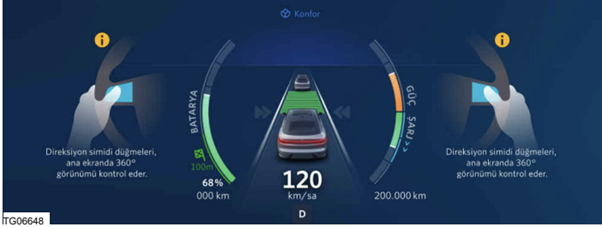
What Are Vehicle Warning Lights and Why Are They Important?
Warning lights are instant alerts the vehicle gives you. Some indicate that a system is active, while others signal a malfunction or risk.
It is important to interpret these lights correctly because:
- It allows you to notice a potential malfunction early.
- It reduces safety risks.
- It lowers the possibility of being stranded on the road.
- In electric vehicles, it helps you protect critical components such as the battery and charging system.
What Do Warning Light Colors Mean?
Red: Immediate attention is required. The vehicle should be stopped safely or checked immediately.
Yellow / Orange: There is a problem or a need for checking. The vehicle can often be used but should not be neglected.
Green / Blue / White: Generally for informational purposes. It does not mean a malfunction.
Most Common Car Warning Lights and Their Meanings
Brake System Warning
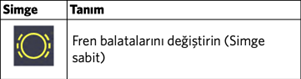
The brake system warning light may indicate that the vehicle's parking brake is engaged, as well as a low brake fluid level or a technical fault in the brake system. If the warning is not short-term, first ensure that the parking brake is completely released; if the sign continues to stay on, the vehicle must be checked safely.
ABS Warning
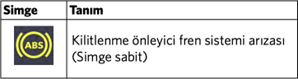
The ABS warning light may indicate that the anti-lock braking system is deactivated or that a fault has been detected in the system. In most cases, the vehicle can continue to move; however, it should be used more carefully as the risk of the wheels locking up increases, especially during sudden braking, and the system should be checked as soon as possible.
Tire Pressure Warning
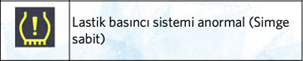
The tire pressure warning light may indicate that the air pressure in one or more tires has dropped below the recommended level. Since this situation can affect driving safety, road holding, and energy consumption, tire pressures should be checked as soon as possible, adjusted according to the manufacturer's recommended values, and if the warning continues, the possibility of a leak or damage to the tire should be evaluated.
Seat Belt Warning

The seat belt warning light indicates that the seat belt of the driver or one of the passengers is not fastened. To ensure that vehicle safety systems function correctly and to provide protection in the event of a possible accident, it must be ensured that all belts are correctly fastened before starting to drive.
Airbag Warning

The airbag warning light indicates that there may be a fault in the airbag system or related safety equipment. In this case, the airbags may not deploy as expected during a possible collision, or the system may not fully provide protection performance; therefore, it is important for the vehicle to be checked by an authorized service or an expert technical team as soon as possible for safety reasons.
Door Open Warning
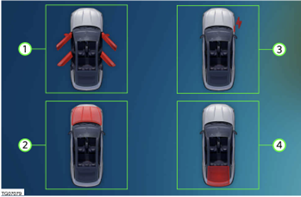
The door open warning light indicates that one of the doors, the trunk lid, or the hood is not fully closed. If this warning is ignored, driving safety may be negatively affected, and unexpected risks may arise during movement; therefore, it must be ensured that all openings are fully and safely closed before taking the vehicle on the road.
General Fault / Service Warning
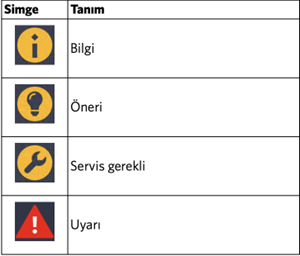
The general fault / service warning light indicates that an error record has been created in one of the vehicle systems or a situation that the driver needs to pay attention to has been detected. This warning alone may not specify a definite malfunction; therefore, the information message on the vehicle screen should be examined carefully first, usage should be continued according to the content of the warning, and if necessary, a service should be consulted for technical control.
Warning Lights Seen in Electric Vehicles
High Voltage System Warning
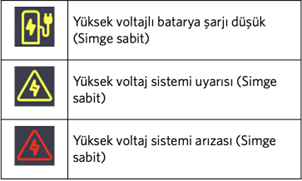
The high voltage system warning light may indicate that an abnormality has been detected in the traction battery, power electronics components, or the high voltage line. Especially if it lights up in red, the situation should be considered more critical, the vehicle should not continue to be used, and professional technical support competent in electric vehicle high voltage systems should be obtained.
Charging System Warning
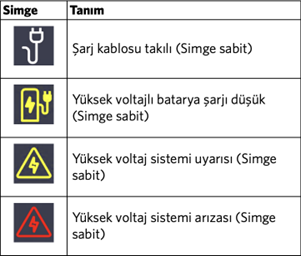
The charging system warning light may indicate that an interruption, connection problem, or system-sourced error has been detected during the vehicle's charging process. In this case, the charging cable, the vehicle charging socket, and the connection of the station used should be checked carefully; if the problem persists, both the equipment and the vehicle's charging system need to be technically evaluated.
Low Battery Warning
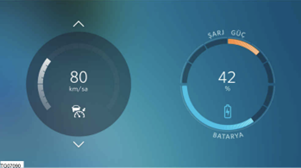
The low battery warning light indicates that the energy level in the traction battery is approaching the critical limit and the vehicle's remaining range has significantly decreased. In this case, it becomes important to head to the nearest suitable charging point, avoid sudden accelerations, use high-energy-consuming systems more controlledly, and manage the remaining energy efficiently.
12V Battery Warning

The 12V battery warning light indicates that there may be a weakening, charging problem, or connection-sourced irregularity in the 12-volt battery that feeds the vehicle's auxiliary electrical systems. If this warning continues, some electronic functions in the vehicle may be affected; therefore, the situation should be checked shortly and, if necessary, the battery and charging system should be technically evaluated.
Regenerative Braking Warning
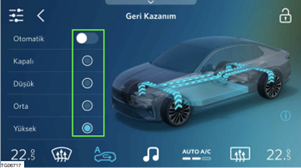
The regenerative braking warning light may indicate that the energy recovery system is working limitedly during braking or cannot provide the expected performance. In this case, the deceleration character of the vehicle may feel different than normal; attention should be paid to this during driving, and if the warning continues, the system should be checked technically.
Power Limitation Warning
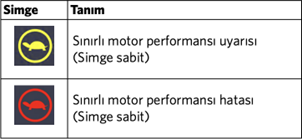
The power limitation warning light may indicate that the vehicle is limiting performance in order to protect the battery, motor, inverter, or related power electronics components. In this case, the vehicle may accelerate or react slower than normal; driving should be continued without forcing the system, and if the warning does not disappear shortly, a service should be consulted for technical control.
Battery Temperature Warning

The battery temperature warning light indicates that the operating temperature of the traction battery has gone outside the ideal range and the system may be affected by conditions that are too hot or too cold. This situation may temporarily affect charging performance, driving range, and vehicle performance; therefore, the vehicle should be rested for a while, kept in suitable environmental conditions, and technical support should be obtained if the warning becomes permanent.
Charging Port Open Warning
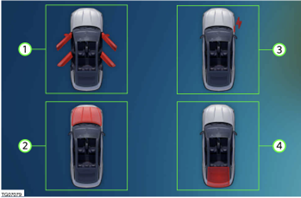
The charging port open warning light indicates that the charging cover or the charging port is not fully closed or that the system detects an opening in the connection area. Since this situation may reduce protection against external factors and may require checking before driving, the charging area should be examined carefully, the cover should be closed correctly, and if the warning continues, it should be evaluated in terms of a mechanical or sensor-sourced problem.
Ready Indicator
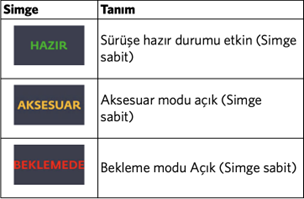
The Ready indicator is not a malfunction warning; it expresses that the electric vehicle is ready for driving. Since electric vehicles can operate quietly, the vehicle can move at any moment even if no engine sound is heard; therefore, care should be taken especially in parking areas, narrow maneuvers, and pedestrian-dense areas.
What Should Be Done When a Warning Light Lights Up in an Electric Vehicle?
First, look at the color of the light. Then, read the explanation on the vehicle screen. If there are symptoms such as performance loss, change in brake feel, burning smell, failure to charge, or overheating, take the situation seriously.
In the following cases, it may be more appropriate not to continue using the vehicle:
- Red high voltage warning
- Brake system failure
- Severe loss of power
- Smoke, smell, or overheating
- A clear "consult service" warning appearing on the vehicle screen
In electric vehicles, user intervention is not appropriate, especially for warnings related to the high voltage system. In such cases, the safest way is to obtain authorized service or roadside assistance support.
Source:
1. Togg. T10F User Manual. Trumore Digital Platform.
https://toggprodcdn.blob.core.windows.net/trumore/T10F_Kullanici_El_Kitabi_TR_TR.pdf