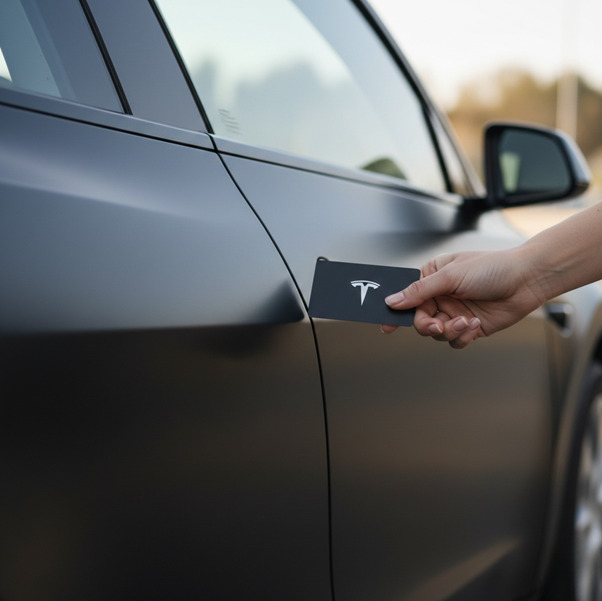
Electric vehicles (EVs) have a much more complex architecture in terms of software, electronic control units (ECUs), and cybersecurity compared to internal combustion vehicles. One of the fundamental security components of this complexity is the immobilizer system.
What is an Immobilizer?
An immobilizer is an electronic security system that prevents the vehicle from being started by unauthorized persons. Its main purpose is to prevent the vehicle from moving without proper key or digital authentication.
In brief:
- If the key is incorrect,
- If authentication fails,
- The ECU does not give approval and the vehicle does not start.
In electric vehicles, this system is not limited to just "locking the engine"; it works integrated with high voltage systems, battery management (BMS), and drive control units.
How Does the Immobilizer System Work?
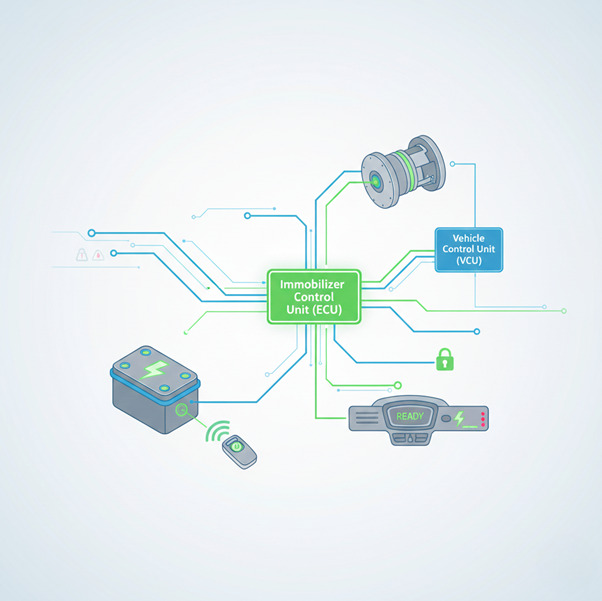
The working logic of the immobilizer system is based on these basic steps:
- Key Identification: The RFID / transponder chip in the key carries a digital identity specific to the vehicle.
- Vehicle – Key Communication: The vehicle receives the signal from the key and transmits it to the ECU.
- Verification: The ECU compares the key identity with the information stored in the system.
Authorization: If authentication is successful, high voltage relays open in electric vehicles and the drive system is activated. If authorization fails, the vehicle does not enter "Ready" mode and the drive system remains locked.
Do Electric Vehicles Have Immobilizers?
Yes, all modern electric vehicles have an immobilizer system; however, the immobilizer structure in electric vehicles, unlike internal combustion vehicles, is designed to protect not only the motor but the entire battery – inverter – electric motor chain. In electric vehicles, the immobilizer system works integrated with BMS (Battery Management System), VCU (Vehicle Control Unit), and Gateway ECU, transforming the authentication between the vehicle and key into a central security layer.
In case of unauthorized access, high voltage lines are not activated, battery outputs remain locked, and the vehicle physically cannot move; thanks to this integrated structure, electric vehicles have a higher security level against theft compared to traditional vehicles.
Which Vehicles Have Immobilizers?
In general, the vast majority of vehicles produced after 2000, and all modern electric and hybrid vehicles, have immobilizer systems as standard.
Whether a vehicle has an immobilizer can be determined by: the lock or key symbol on the dashboard, the immobilizer warning light that briefly flashes when the ignition is turned on, and security system descriptions in the user manual.
What is an Immobilizer Failure and How is it Detected?
An immobilizer failure is the unsuccessful completion of the key – vehicle verification process. In electric vehicles, this situation can lead to more critical consequences.
Common symptoms:
- Vehicle does not enter "Ready" mode
- Key not recognized warning
- Immobilizer light stays on continuously
- Vehicle does not activate even through the mobile application
Possible causes:
- Key transponder failure
- ECU software error
- Battery voltage drop
- Security lock following unauthorized key attempts
Solutions:
- Try with spare key
- Vehicle software update
- Key re-pairing through authorized service
Sources
- Wikipedia – Immobiliser System. Access: https://en.wikipedia.org/wiki/Immobiliser
- Kia Türkiye – Immobilizer Nedir, Ne İşe Yarar, Nasıl Çalışır?. Access: https://www.kia.com/tr/kia-dunyasi/sss/immobilizer-nedir-ne-ise-yarar-nasil-calisir.html
- Embien – Araç Sistemlerinde Elektronik Kontrol Üniteleri (ECU’lar). Access: https://www.embien.com/automotive-insights/major-electronic-control-units-ecus-in-vehicle-systems
- Artificial intelligence was used for images.