Electric vehicle (EV) batteries can be recycled, and this topic is no longer just an environmentally conscious choice — it is rapidly becoming the “mandatory standard” due to critical mineral supply, cost, regulation, and geopolitical reasons. The European Union’s new battery framework addresses the entire battery lifecycle from design to traceability, collection to recycling, and recovered content targets, making this transformation a market requirement.
But the truly intriguing question is this: Can recycling actually establish a battery-to-battery loop? Or are we still talking about “partial recovery and waste management” for some chemistries? In this article, we will examine both the technology and the most concrete field data together.
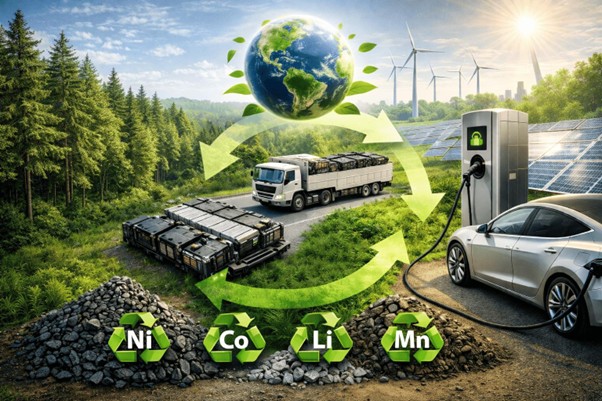
Can Electric Car Batteries Really Be Recycled?
What we call a “battery” is not a single material. The pack — with its cell/module structure, BMS, cooling components, wiring, and various chemistries (NMC/NCA/LFP) — is a highly complex product. For this reason, recycling is a far more disciplined process than conventional metal separation.
Two critical realities stand out in the industry today:
- The recovery of valuable metals such as nickel, cobalt, and copper drives the economic engine.
- Lithium recovery is more challenging, but as regulations (especially in the EU) clarify targets, technology and investment are accelerating.
This is precisely where the scale that China has built in the field translates theory into practice. China has introduced a traceability approach for batteries, making it harder for batteries to fall off the grid. This means the question “where is the battery, who has it, what condition is it in?” is managed not just through goodwill, but through the system.
How Is Electric Vehicle Battery Recycling Done?
Battery recycling is not “throwing it into a factory and melting it” — it is most often a four-stage chain:
1) Collection, safe transportation and discharge
Batteries may be damaged; thermal risk management begins here.
2) Disassembly and pre-treatment
The pack is opened, modules/cells are separated. Metals, plastics, and active materials are separated through mechanical shredding and sorting.
3) Black mass (active material mixture)
This is often the most “value-dense” part: cathode/anode actives and critical metals.
4) Refined recovery (hydrometallurgy / pyrometallurgy / hybrid)
Whichever method is chosen, the goal is the same: reaching battery-grade quality that can be reused in battery production.
For those who want to see real-world application at this point, one of the most understandable examples is CATL and its subsidiary Brunp. Through Brunp, CATL clearly explains its closed-loop approach extending from production to use, second life, and recycling.
There is not just a model description, but also measurable field data. The publicly reported rates for Brunp’s 2024 performance and the outputs supporting them are reported as follows:
- Rate: %99,6
Metal: Nickel (Ni)
Verified by: Processing scale of over 120,000 tons of waste/used batteries in 2024
- Rate: %99,6
Metal: Cobalt (Co)
Verified by: Processing scale of over 120,000 tons of waste/used batteries in 2024
- Rate: %99,6
Metal: Manganese (Mn)
Verified by: Processing scale of over 120,000 tons of waste/used batteries in 2024
- Rate: %96,5
Metal: Lithium (Li)
Verified by: Production of 17,100 tons of recycled lithium salt in 2024
These figures show not only that recycling is “possible,” but also that when properly established, it can be managed at very large scale.
How Efficient Is Electric Vehicle Battery Recycling?
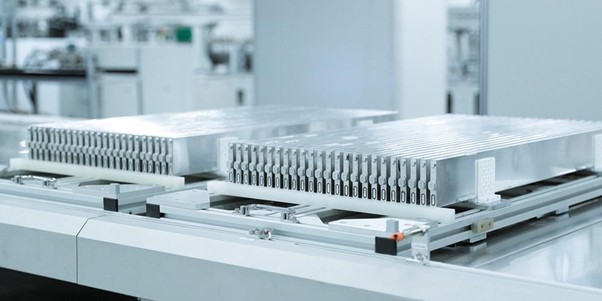
“Efficiency” is not a single number; it is most often a combination of three separate questions:
- Recycling efficiency: How much recovery is made from the total battery?
- Material recovery targets: What is the status of recovery for specific metals like lithium, nickel, cobalt?
- Quality: Does the recovered material actually reach the purity level that can be used in battery production?
The EU defines recycling efficiency and material recovery targets to reduce this ambiguity; it also introduces traceability and sustainability requirements throughout the battery lifecycle.
In the field, the chemistry difference is decisive. The economics and processes between nickel-cobalt-heavy chemistries like NMC/NCA and cobalt-free chemistries like LFP can operate very differently. This is precisely why the level at which actors like Brunp achieve “which rate for which metal” makes the industry’s benchmark more visible.
Why Is Electric Vehicle Battery Recycling Important?
Because the EV transition means not just removing exhaust pipes, but redesigning the mining, refining, manufacturing, and waste chain.
- Environmental impact: Properly managed recycling carries the potential to reduce environmental burden compared to primary mining (this is measured by LCA).
- Supply security: Inputs like lithium, nickel, cobalt, and graphite are at the center of energy security discussions.
- Market access: EU regulation is elevating recycling and lifecycle requirements to the level of “market entry.”
- Incentive/compliance pressure on the US side: In the US, supply chain design is linked to critical mineral and battery component requirements through incentive mechanisms; additionally, the goal of reducing China dependency is prominent through FEOC restrictions.
There is a small but impactful distinction here: Recycling does not just mean “managing waste” — when properly structured, it means producing domestic raw materials. This is why Brunp’s high rates, as well as the hundreds of thousands of tons of processing capacity that carries them, attract attention.
Challenges in Electric Vehicle Battery Recycling
The difficulty of battery recycling is not because “there is no technology” but because it is highly multivariable:
- Chemistry diversity: Process design becomes more difficult.
- Safety: Damaged batteries may carry fire risk.
- Quality target: Battery-grade purity requires process precision.
- Logistics and traceability: The battery must be directed to the correct channel (second life or direct recycling).
China is building a system precisely at this point. With traceability provisions, the aim is to record the battery throughout its lifecycle, and as scale grows, this is becoming one of the main factors determining field order.
EV Battery Recycling in China: Companies, Field Practices, and the Closed-Loop Reality
In China, battery recycling is going beyond “being a sector” and is increasingly being managed like a national-scale supply strategy. As of 2026, China is reported to be activating interim measures that assign digital identities to NEV (New Energy Vehicle) power batteries and strengthen recycling and “comprehensive utilization” management.
In this picture, the CATL and Brunp duo are frequently cited examples both in terms of industrial capacity and rates. Moreover, this is not just a technical flow; it is also supported by international collaborations. In the announcement of Brunp’s collaboration with Mercedes-Benz, the goal of recovering metals such as nickel, cobalt, manganese, and lithium from spent EV batteries and converting them back into cathode materials is clearly stated.
EU, US, China: Where Are Regulations Headed?
European Union (EU): Regulation (EU) 2023/1542 establishes a comprehensive framework from sustainability to traceability, collection and recycling to waste batteries. The market impact of this approach is clear: Compliance is not an option, but a market access criterion.
United States: The picture does not progress through a single text like the EU. The incentive side (30D), supply chain requirements, and FEOC rules strengthen the critical minerals focus. The EPA also announces plans to regulate waste management and improve recycling for lithium batteries.
China: The traceability infrastructure has been under construction for a long time, and with the digital identity approach to be activated in 2026, it says it will further tighten channel management.
Is There Electric Vehicle Battery Recycling in Turkiye?
Turkiye has a regulatory framework for the management of battery and accumulator waste. As EV battery scale grows, the key determining questions will become more visible: how will collection and traceability be standardized, how will second-life applications be secured, and how will the material emerging from recycling be elevated to battery-grade quality?
The answers to these questions require Turkiye to build strategy not only from a waste management perspective, but also from the perspective of energy storage and critical mineral supply.
Electric vehicle batteries can be recycled — that is clear. But the next stage is no longer “are we recycling?” It is: Who is tracking the battery, who is collecting it, who is allocating it to a second life, who is elevating it to battery-grade quality, and who is guaranteeing this through regulation?
China’s traceability and digital identity line, the EU’s lifecycle regulation, the US’s incentives and supply chain requirements... All converging on the same point: Battery recycling will become the domestic raw material production line of the new world. Brunp’s rates and the industrial output scale carrying them are one of the most concrete examples showing that this future has already begun “today.”
Sources
1. https://www.electrive.com/2025/10/23/catl-subsidiary-brunp-reports-progress-in-battery-recycling/
2. CnEVPost. "Brunp reached 96% recovery rate in recycled battery materials."
https://cnevpost.com/2025/10/22/brunp-96-recovery-rate-recycled-battery-materials/
3. International Energy Agency (IEA). Interim provisions on the traceability management of power battery recycling in new energy vehicles.
4. International Energy Agency (IEA). Technical standards for comprehensive utilisation of waste EV batteries (2024).
5. European Union. Sustainability rules for batteries and waste batteries.
6. European Union. Regulation (EU) 2023/1542 on batteries and waste batteries.
https://eur-lex.europa.eu/eli/reg/2023/1542/oj/eng
7. European Union. Battery Regulation (EU) 2023/1542 – Official text.
https://eur-lex.europa.eu/legal-content/EN/TXT/PDF/?uri=CELEX%3A32023R1542
8. European Union. Battery Regulation (EU) 2023/1542 – Consolidated version.
https://eur-lex.europa.eu/legal-content/EN/TXT/PDF/?uri=CELEX%3A02023R1542-20230728
9. CATL. Brunp company’s progress in battery recycling.
https://www.catl.com/en/news/6595.html
10. Images were generated using artificial intelligence.