One of the most frequently asked questions by users considering purchasing an electric vehicle is: “How much does an electric car burn per 100 km?” In fact, here we are talking about electricity consumption instead of “fuel.” This consumption is usually expressed in kWh/100 km. The lower the value, the less electricity the vehicle consumes to cover the same distance.
Among some popular electric models sold in Türkiye or with accessible official technical data, the lowest consumption values are generally seen in sedan and compact hatchback body styles. The main reasons for this are lower weight, better aerodynamics, and smaller tire/wheel combinations. In SUV models, consumption tends to increase as weight and air resistance increase.

How is Electricity Consumption Measured in Electric Vehicles?
The consumption of electric vehicles is mostly measured in kWh/100 km. This expression shows how many kWh of electricity the vehicle consumes in 100 kilometers of use. For example, if a vehicle consumes 13.8 kWh/100 km, it theoretically uses 13.8 kWh of energy in 100 km.
The practical calculation is as follows:
Cost for 100 km = Consumption (kWh/100 km) × Unit price of electricity
Example:
If a vehicle consumes 13.6 kWh/100 km and you purchase electricity at a unit price of 1, your cost for 100 km will be 13.6 × unit price. Since the unit price varies between home charging, AC stations, and DC fast charging, the same vehicle creates different costs in different places. Therefore, the answer to the question “how many TL does an electric car burn?” is not a single figure; it varies according to the vehicle and the charging scenario.
Electric Car Models with the Lowest Electricity Consumption
The table below has been prepared according to the WLTP combined consumption data found on official brand pages. Since consumption can vary for different wheel, battery, drivetrain, and equipment options of the same model, the lowest available version on the relevant official page of each model was taken as the basis for the table. For Togg, only the most efficient version of the T10F has been added.
| Rank | Model | Body Type | Official WLTP Combined Consumption (kWh/100 km) | Official WLTP Range |
|---|---|---|---|---|
| 1 | Togg T10F V1 RWD Long Range (19”) | Fastback | 13.6 | 623 km |
| 2 | Fiat 500e | Hatchback | 13.6 | 320 km |
| 3 | Tesla Model 3 RWD | Sedan | 13.8 | 520 km |
| 4 | Hyundai Ioniq 6 | Sedan | 13.9 | 429 km |
| 5 | Renault Megane E-Tech Electric | Crossover / Hatchback | 15.0 | 467 km |
| 6 | BYD Seal Design | Sedan | 15.4 | 460 km |
| 7 | Peugeot E-208 | Hatchback | 15.4 | 363 km |
| 8 | BYD Dolphin | Hatchback | 15.9 | 427 km |
Togg T10F V1 RWD Long Range (19”)
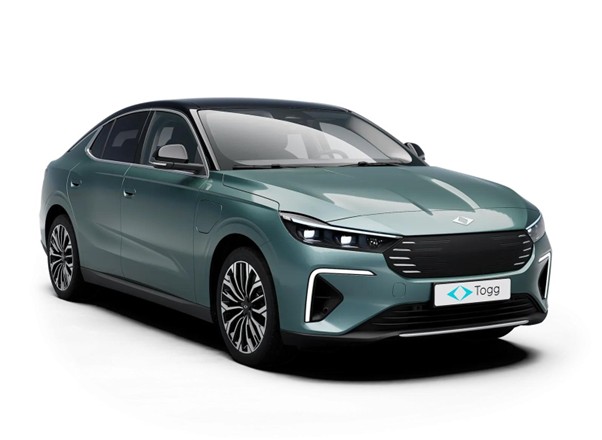
Togg's most efficient model in this list, according to official catalog data, is the T10F V1 RWD Long Range 19-inch version. This version features 13.6 kWh/100 km WLTP combined consumption and 623 km WLTP combined range information. This value moves the Togg T10F to the top of the list in terms of efficiency.
The fastback body structure and aerodynamic advantage play an important role in the T10F reaching such low consumption values. Since air resistance is lower compared to SUV-bodied vehicles, energy efficiency can remain at a better level. This shows that the question “How much does Togg burn?” should be looked at on a model basis; because the T10F and T10X are not in the same consumption band.
Fiat 500e
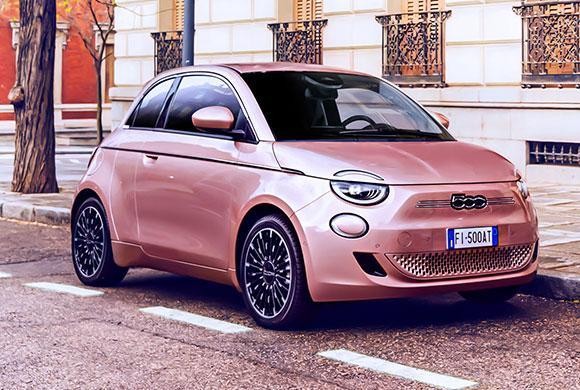
The Fiat 500e offers 13.6 kWh/100 km WLTP combined consumption in official technical data. On the official catalog side, approximately 320 km WLTP average range information is seen depending on the version. This makes it one of the most efficient electric cars, especially for urban use.
Thanks to its compact dimensions, lower weight, and city-oriented structure, the 500e is a very logical option for daily commuting scenarios. It may be limited for large family use or large luggage needs; however, it is an extremely strong model when viewed from a consumption perspective.
Tesla Model 3 RWD
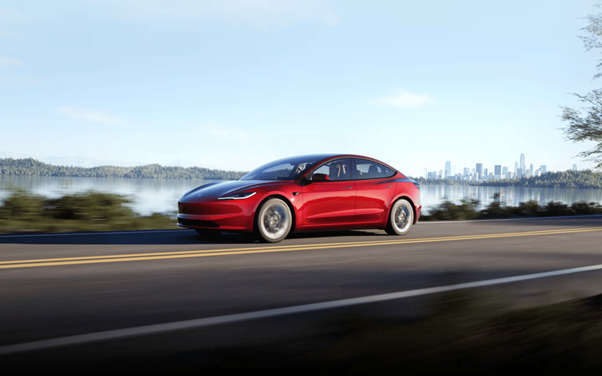
On Tesla Model 3’s Türkiye page, there is official power consumption of 13.8 kWh/100 km and WLTP range information of 520 km. These data make the Model 3 RWD one of the most efficient electric sedans accessible in Türkiye.
To give a short answer based on official data, especially to the question “How much does a Tesla burn per 100 km?”: this value for the Model 3 RWD is at the level of approximately 13.8 kWh/100 km. The sedan body form, aerodynamic structure, and efficiency-oriented platform are among the main reasons for this result.
Hyundai Ioniq 6
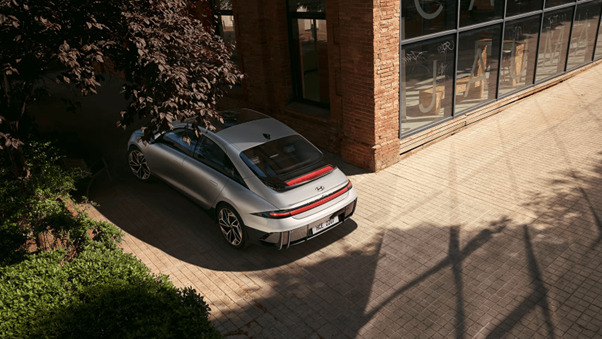
On Hyundai Ioniq 6’s Türkiye technical page, there is energy consumption of 13.9 kWh/100 km and combined range data of 429 km. This value places it at a very strong point among low-consumption electric sedans.
The Ioniq 6 is a model that stands out especially with its aerodynamic design. It is one of the striking options for users looking for low consumption, preferring a sedan structure, and prioritizing efficiency on long journeys. The fact that the consumption value is low is as valuable as the range on paper in terms of economical use.
Renault Megane E-Tech Electric

In Renault Megane E-Tech Electric’s Türkiye data, there is 15.0 kWh/100 km WLTP combined consumption and 467 km range information. This level can be considered quite balanced for a model positioned between a hatchback and a crossover.
The Megane E-Tech stands at an intermediate point that is not as low as a sedan but does not offer consumption as high as an SUV. For this reason, it constitutes a balanced alternative for users looking for both practical use and reasonable energy consumption.
BYD Seal Design
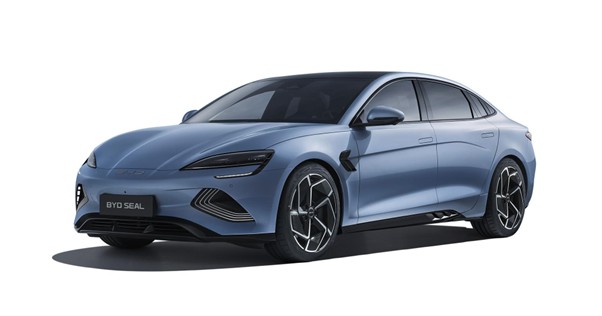
On BYD Seal Design’s official Türkiye page, 15.4 kWh/100 km combined energy consumption and 460 km combined range data are announced. This result is quite competitive for an electric vehicle in sedan form.
The Seal Design stands out especially for users who want to see design, range, and efficiency in the same package. It is also clearly seen on the official page that consumption increases in AWD versions; this clearly shows that as the drivetrain type and power increase, the energy requirement also increases.
Peugeot E-208
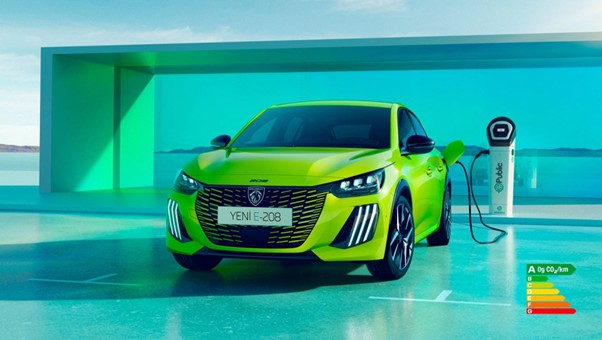
For the Peugeot E-208, the official technical brochure includes 15.4 kWh/100 km combined WLTP consumption and 363 km combined range data. In the compact hatchback class, these values offer a reasonable and balanced picture for urban use.
The E-208 stands out especially for users who care about design, compact structure, and ease of urban use. Although it does not offer consumption as low as sedans with large batteries, it can be evaluated as one of the efficient options within its class.
BYD Dolphin

On BYD Dolphin’s official Türkiye page, there is 15.9 kWh/100 km combined energy consumption and 427 km combined range information. It is also stated that the urban range data is higher.
The Dolphin aims for a balance of urban use, daily practicality, and sufficient range with its hatchback body. Although the consumption value is not as aggressive as the lowest models on the list, it offers a balanced profile for daily use.
For more information about BYD's other models in Türkiye and Chinese-made electric vehicles, you can check our article on Electric Car Brands Produced by China.
Why Do SUV Electric Vehicles Consume More Electricity?
SUV-bodied electric vehicles generally consume more electricity. The main reasons for this are higher weight, larger frontal area, and more air resistance. In short, as the vehicle gets larger and higher, more energy is required to cover the same distance.
That's why sedan, fastback, and compact hatchback models often rank at the top of efficiency lists. The fact that the Togg T10F is in a lower consumption band compared to the Togg T10X is also a good example to understand this difference; the fastback body structure is more advantageous than an SUV.
What Should Be Considered for Low Consumption in Electric Vehicles?
The first step for low consumption is choosing the right vehicle. Vehicles with low kWh/100 km values in official technical data offer more economical use in the long run. Especially for users who drive high mileage per year, even a difference of a few kWh can turn into a serious cost advantage at the end of the year.
The second important issue is driving style. Sudden accelerations, constant high speeds, and hard braking increase consumption. A more constant speed, smoother throttle use, and the habit of regenerative braking improve efficiency.
The third issue is temperature. Air conditioning and heating use can increase actual consumption, especially in very hot or very cold weather. Therefore, although WLTP data are very useful for comparison, real-life consumption values may differ depending on driving conditions. Official statements from Fiat, BYD, and other brands also state that actual usage may vary depending on traffic, temperature, driving style, and the use of auxiliary systems.
Details such as tire pressure, wheel size, load amount, and roof accessories are also important. Especially larger wheels and heavier usage scenarios can pull consumption upwards.
You can use the ChargeIQ Charging Station Map to find electric charging stations near you.
Sources
1. Tesla. Model 3 – Sport Electric Sedan Features.
https://www.tesla.com/tr_tr/model3
2. Hyundai. IONIQ 6 Technical Specifications.
https://www.hyundai.com/tr/tr/arac-modelleri/ioniq6/teknik-ozellikler
3. Togg. Togg T10F Electric Car Catalog (PDF).
https://trumore-cdn.togg.cloud/ToggT10FKatalog.pdf
4. Togg. Togg T10X Electric SUV Catalog (PDF).
https://trumore-cdn.togg.cloud/ToggT10XKatalog.pdf
5. Fiat. Fiat 500e Electric Car Catalog (PDF).
https://kampanya.fiat.com.tr/kataloglar/pdf/500e-katalog.pdf
6. Renault. Megane E-Tech Electric Vehicle Introduction Page.
https://www.renault.com.tr/elektrikli-araclar/megane-e-tech-elektrikli.html