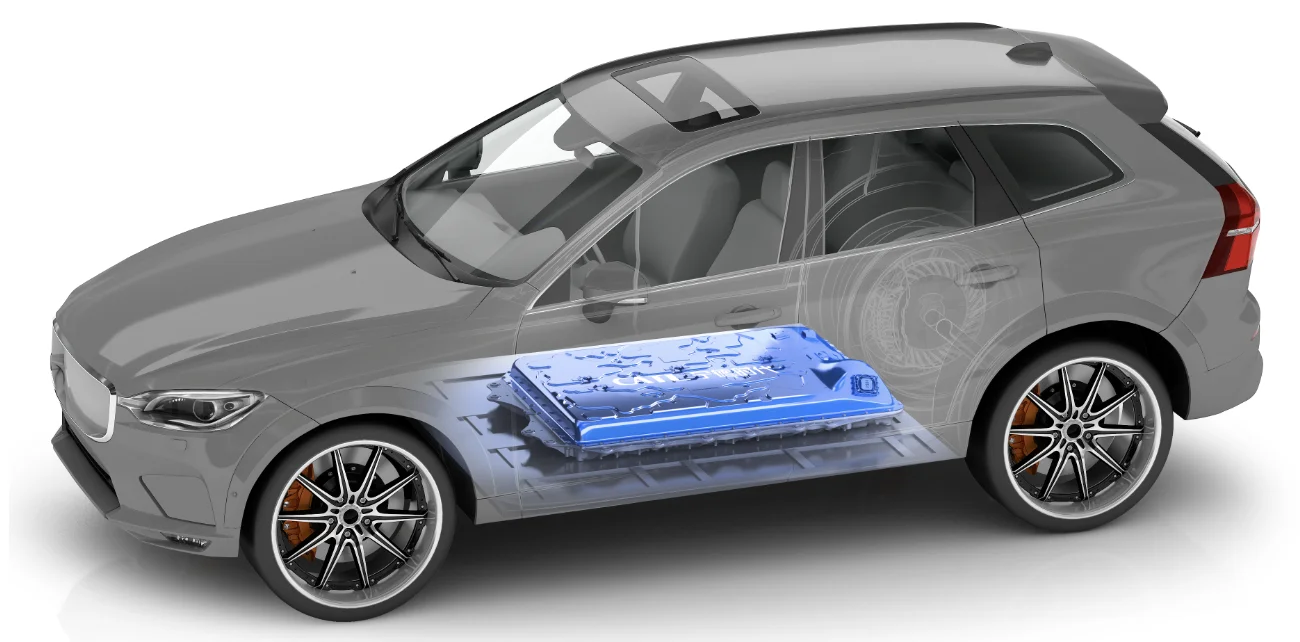
CATL Electric Vehicle Battery
For electric vehicle users, the battery is no longer just a single component; it is a system that directly impacts range, charging performance, daily usability, and the vehicle's long-term value. Consequently, battery lifespan is a critical issue, especially for drivers who actively use their electric vehicles. From a technical standpoint, battery lifespan is determined by a combination of factors: cell chemistry, temperature, charging routines, usage profiles, thermal management systems, and natural aging over time. In other words, battery lifespan is not defined by a single figure but rather by usage scenarios.
In this article, we explore recommendations for extending battery life based on direct manufacturer advice, official sources, and technical studies. If you would like to delve deeper into battery replacement and recycling, you can check out our article: Can Electric Vehicle Batteries Be Recycled?
Why Is Battery Life Important in Electric Vehicles?
In electric vehicles, battery health affects not only the vehicle's full-charge range but also its DC fast-charging performance, energy efficiency, long-distance trip planning, and resale value. While the system continues to operate as the battery ages, its usable energy capacity may gradually decline over time. Consequently, for the user, the primary concern is often not "will the battery suddenly die?" but rather "how can I better preserve battery health over the years?" Kia defines the concept of "State of Health" as the ratio of the energy the battery can store over time.
From a technical perspective, battery life encompasses more than just the duration of use; it is also linked to the vehicle's energy economy, charging strategy, and total cost of ownership. A gradual reduction in battery capacity can necessitate more frequent charging, more careful route planning, and more precise energy management, particularly for heavy users. Therefore, the issue of battery life is less a matter of vehicle servicing and more a matter of optimizing usage.
What Is the Lifespan of Electric Vehicle Batteries?
It is technically incorrect to answer this question with a single figure, as battery lifespan varies based on factors such as climate, chemistry, usage intensity, thermal management quality, and charging habits. The Alternative Fuels Data Center (part of the U.S. Department of Energy) reports that many manufacturers offer battery warranties covering approximately 8 years or 100,000 miles; furthermore, modern batteries can last around 12–15 years in temperate climates and 8–12 years in harsher climates.
Key Factors Affecting Battery Lifespan
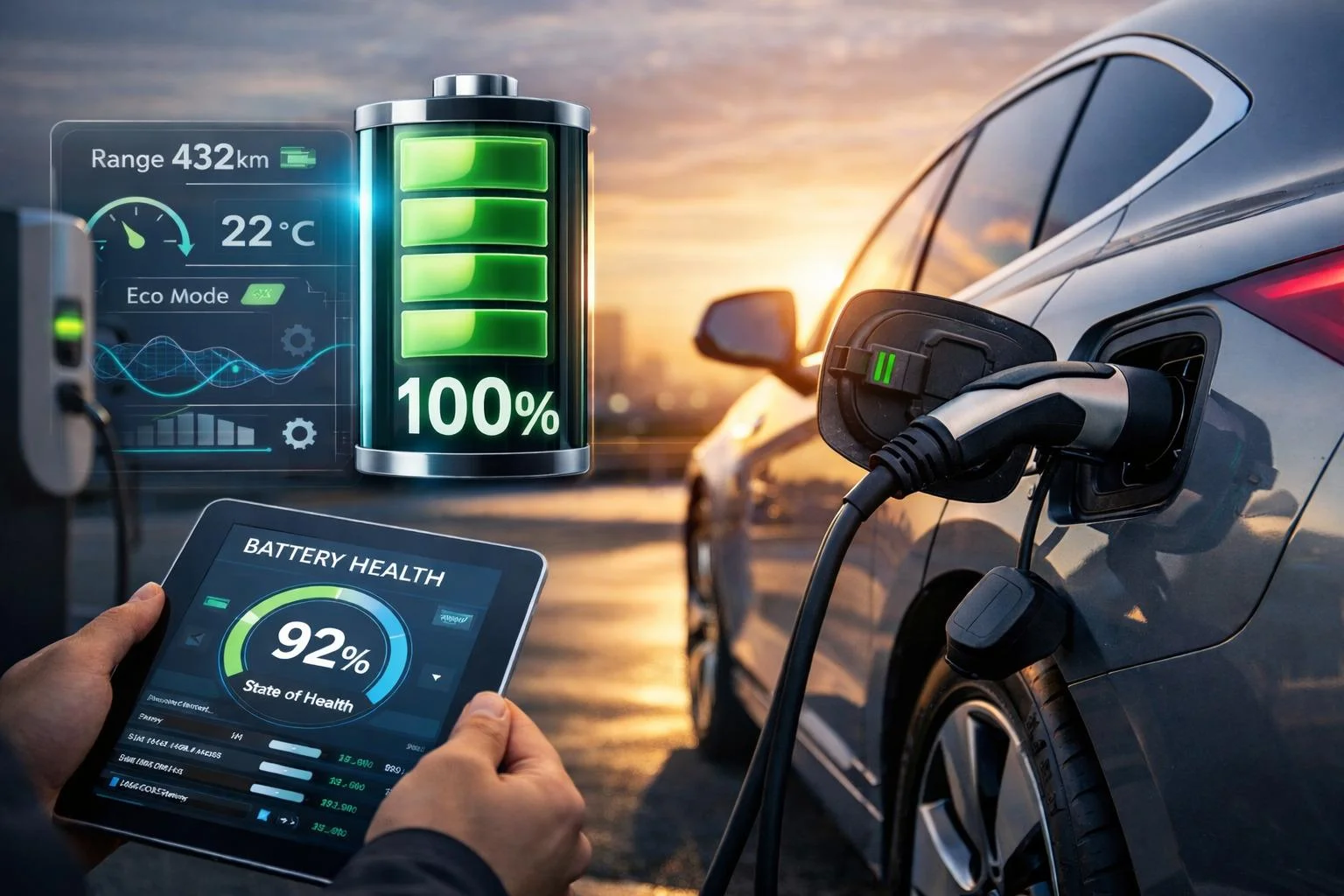
High Temperatures and Thermal Stress
Temperature is one of the most significant factors accelerating battery aging. According to a 2024 study published in *Scientific Reports*, battery temperature is a critical variable; exposure to extreme high or low temperatures can hasten the aging process. The study notes that the optimal operating range for most traction batteries is approximately 15–35°C and that maintaining a controlled battery temperature helps extend its lifespan.
For the everyday user, this means that even if a vehicle is equipped with a robust thermal management system, parking in intense heat for extended periods or subjecting the battery to constant high thermal loads can place additional stress on the battery. Consequently, simple measures—such as parking in the shade or in a covered garage, or scheduling charging times strategically—are particularly important during the summer months.
Keeping the Battery at a Very High Charge Level for Extended Periods
Many manufacturers do not recommend maintaining the battery at a consistently high charge level as part of a daily routine. Tesla clearly states that the recommended limit for daily use is displayed on the vehicle's screen—noting that for some vehicles, this limit is around 80%—and that charging to 100% should generally be reserved for needs such as long-distance trips. The same support page also advises against leaving the vehicle at near-0% or near-100% charge for days or weeks at a time.
Therefore, the approach that "fully charging every day is best" is technically incorrect. A more accurate approach is to adhere to the vehicle's recommended daily charging limit and reserve a full charge for specific scenarios where it is needed. Furthermore, as Tesla notes, different battery types may require different charging routines; thus, rather than applying a one-size-fits-all rule for every EV, one should rely on the manufacturer's display and the user manual.
Leaving the Battery at a Very Low Charge Level for Extended Periods
It is not only high charge levels that pose a risk; leaving the battery at a very low charge level for a long time is also not a healthy habit. Tesla indicates that frequently allowing the vehicle's charge to drop to low levels can place strain on the battery over time. Technical literature also confirms that excessive discharge can accelerate capacity loss.
For the user, the practical implication is clear: instead of consistently driving the vehicle until the charge is nearly depleted, it is better to adopt a routine of charging in a more balanced and regular manner whenever the opportunity arises. This is particularly important if the vehicle is to remain parked for an extended period; in such cases, one should charge the vehicle to the level recommended by the manufacturer for storage. Tesla recommends leaving the vehicle at approximately a 50% charge level if it is to remain idle for more than two weeks.
Charging Habits: Balancing AC and DC
Fast charging offers great convenience in daily life; however, manufacturers generally recommend using it based on need. Tesla advises opting for Level 1 or Level 2 charging—lower-power AC-based methods—whenever possible, while reserving Supercharging primarily for road trips and long-distance drives. This approach aligns with technical studies highlighting the impact of high C-rates and heat generation on battery degradation.
Rather than making a sweeping statement like "DC fast charging is harmful," it is more accurate to say this: DC fast charging is an integral part of battery design, yet it yields a more balanced profile regarding longevity when used based on necessity rather than as a standard daily routine. The best advice is to view the AC/DC distinction through the lens of usage scenarios rather than ideology.
Climate Control and Cold Weather Conditions
Cold weather is a factor that most EV users notice immediately. According to the U.S. Department of Energy, EV efficiency and range can drop significantly in cold weather; in mixed driving scenarios, the reduction in range can reach approximately 41%. The same source notes that a substantial portion of the additional energy consumption goes toward cabin heating.
This does not mean the battery is permanently "damaged"; however, cold weather severely impacts instantaneous usable energy and perceived range. Kia also explicitly states that range estimates are influenced by battery temperature, battery health, and auxiliary loads. In other words, the drop in range a driver experiences in winter is often caused not just by battery chemistry, but by a combination of heating loads and ambient conditions.
Usage Profile and Power Demand
Battery aging is not solely about charging habits. Frequency of use, driving distance, load, driving style, and the power levels demanded from the battery can all influence aging. A study published in *Scientific Reports* indicates that battery aging is affected by driving habits, usage frequency, road conditions, driving distance, and vehicle load.
Consequently, scenarios such as prolonged high-speed driving, constant aggressive acceleration, or driving with heavy loads not only increase energy consumption but can also subject the battery to greater thermal and electrical stress.
The Most Effective Ways to Extend Electric Vehicle Battery Life
BYD Blade Batarya
Adhere to Your Vehicle's Daily Charging Limit
One of the most effective and practical methods is to stick to the daily charging limit recommended by the vehicle manufacturer. Tesla, for instance, states that the daily usage limit for certain vehicles is approximately 80% and that this limit is displayed on the vehicle's screen. The key is to follow the vehicle's own recommendation. Stay within the manufacturer's suggested limit for daily use and reserve a full charge for when it is actually needed.
Avoid Leaving the Vehicle at Near-0% or 100% Charge for Extended Periods
Leaving the battery at extreme charge levels for long periods is a habit that should definitely be avoided. Tesla is very clear on this point: the vehicle should not be left at or near 0% or 100% charge for days or weeks. If the vehicle is to be parked for an extended period, it is better to leave the battery at a moderate charge level.
This recommendation is also highly practical for everyday life. Rather than charging the vehicle to 100% days before a trip—or parking it with a very low charge—it is a healthier routine to schedule charging closer to the time of departure.
Make AC Charging Your Standard Routine Whenever Possible
For users with access to AC charging at home or work, the most balanced approach is to make it a standard daily routine. Tesla’s official guidelines also recommend prioritizing Level 1 and Level 2 charging whenever possible, while reserving high-power fast charging primarily for long-distance travel.
This recommendation does not mean avoiding fast charging altogether; rather, it is about distinguishing between daily driving needs and long-distance travel scenarios.
Use Pre-conditioning While Charging in Winter
The U.S. Department of Energy notes that pre-conditioning an EV is more efficient when the vehicle is still plugged in. This allows the energy required to bring the cabin and battery to the optimal temperature before driving to be drawn directly from the grid.
This is an effective habit for both comfort and range, especially during the winter months. It can improve not only the perceived range but also efficiency during the initial kilometers of the drive.
Plan Parking and Charging Carefully in Extreme Heat
High temperatures are a primary driver of battery degradation. Therefore, on very hot days, it is wise to park in the shade whenever possible, avoid parking with a fully charged battery for extended periods, and utilize smart scheduling features if the vehicle is equipped with them. Technical studies clearly demonstrate that high temperatures accelerate battery degradation.
While this tip may seem minor, it can make a significant difference in the total thermal load the battery is exposed to throughout the year.
Don't Measure Battery Health Solely by Estimated Range
Many users attempt to gauge battery health based only on the estimated range displayed in the vehicle; however, this is not always an accurate measure. According to Kia’s definition, SoH (State of Health) represents the ratio of the energy the battery can store over time. Therefore, a true health assessment should be considered independently of factors such as driving style, temperature, tires, auxiliary loads, and short-term fluctuations in range.
A more accurate approach is to monitor range behavior over the long term under similar conditions, track the vehicle's app data, and—if necessary—request a professional battery health check from a service center.
Don't Overlook Tires, Auxiliary Loads, and Overall Efficiency
Battery lifespan is not determined solely by cell chemistry; the vehicle's energy efficiency also impacts its total usage cycle. In cold weather, cabin heating, in particular, becomes a significant source of energy consumption. Data from the DOE indicates that a large portion of this additional consumption stems from cabin heating. Kia also explicitly states that air conditioning, heaters, lighting, and other auxiliary loads reduce driving range.
Consequently, maintaining proper tire pressure, driving smoothly, and using climate control judiciously support battery longevity—not directly, but indirectly—by enhancing overall energy efficiency.
How Do You Monitor Battery Health?
To monitor battery health, one must first understand the correct metric. In Kia’s user documentation, "State of Health" (SoH) is defined as an indicator showing how much energy the battery can store today compared to its initial energy storage capacity. In other words, SoH represents the battery's structural health level, rather than just the driving range on a given day.
Key signs for users to watch out for include a noticeable drop in range under similar weather and usage conditions, unusual changes in charging behavior, the battery percentage depleting faster than expected, and vehicle warning alerts. However, one should avoid jumping to conclusions; cold weather, the use of climate control, or short-distance driving can create similar impressions.
For a detailed overview of battery replacement and service procedures, you can also check out our article, "How Is an Electric Car Battery Replaced?" A related article by ChargeIQ also explains that the decision to replace a battery is usually based on capacity loss and a technical assessment.
Frequently Asked Questions About Electric Vehicle Battery Life
What Type of Battery Is Used in Electric Vehicles?
Today, lithium-ion batteries are the most common type used in electric vehicles. Although previous ChargeIQ content has mentioned technologies such as nickel-metal hydride, lead-acid, and ultracapacitors, the primary technology in the vast majority of modern all-electric passenger vehicles is lithium-ion based. The AFDC also emphasizes that all-electric vehicles operate using large traction battery packs.
What Drains Electric Vehicle Batteries the Most?
In the short term, the factors that most noticeably affect range are cold weather, cabin heating, high auxiliary loads, high speeds, and demanding driving conditions. According to DOE data, cabin heating accounts for a significant portion of the range loss experienced in cold weather. Kia also notes that range is influenced by temperature, road conditions, auxiliary loads, and battery health.
What Damages Electric Vehicle Batteries?
Technically, the riskiest habits include leaving the battery at very high or very low charge levels for extended periods, exposing it to unnecessary thermal stress from high temperatures, and engaging in consistently aggressive charging or usage routines without regard for manufacturer recommendations. A study published in *Scientific Reports* indicates that temperature, State of Charge (SoC), current magnitude, and usage profiles are decisive factors in battery aging. Tesla also provides clear recommendations regarding daily charge limits, storage levels, and the use of fast charging.
References:
- Tesla. “Electric Vehicle Range Support”
https://www.tesla.com/support/range
- Kia. “EV Owner’s Manual – Range & Driving Tips”
https://ownersmanual.kia.com/full_webhelp/MV1A/2026/en_US/topics/chapter1_3_4.html
- Kia. “EV Owner’s Manual – Battery Usage Guidelines”
https://ownersmanual.kia.com/full_webhelp/SW1K/2026/en_RG/topics/t00255.html
- U.S. Department of Energy. “Fuel Economy in Cold Weather”
https://www.energy.gov/energysaver/fuel-economy-cold-weather
- U.S. Department of Energy. “Winterizing Your Electric Vehicle”
https://www.energy.gov/articles/winterizing-your-electric-vehicle
- Alternative Fuels Data Center. “Benefits of Electric Vehicles”
https://afdc.energy.gov/fuels/electricity-benefits
- Nature. “Scientific Study on Battery Performance”
https://www.nature.com/articles/s41598-024-71711-w
Images:
- BYD. “Blade Battery Technology”
https://www.byd.com/eu/technology/byd-blade-battery
- CATL. “Passenger EV Battery Solutions”
https://www.catl.com/en/solution/passengerEV/
- Artificial intelligence tools were used for the visuals.